

| 상품 안내 및 환불, 교환, 배송문의 | |
| - 가게 전화번호 : | 1544-1900 |
| - 전화문의 시간 : |
오전 9시부터 오후 6시까지 (매주 월요일, 화요일, 수요일, 목요일, 금요일, 공휴일 제외) |
| - 가게 이메일 : | ink@kyobobook.co.kr |
| - 이용 택배회사 : | CJ대한통운 |
|
판매가게정보 |
|
| - 사업자명 : | (주)교보문고 |
| - 사업자등록번호 : | 102-81-11670 |
| - 통신판매업신고 : | 01-0653 |
|
- 현금영수증 : 발급가능 |
|
|
전화주문 및 결제문의 |
|
| - 꽃피는 아침마을 : | 1644-8422 |
|
가게와 직거래를 하시면 꽃송이 적립 및 각종 혜택에서 제외되고, 만일의 문제가 발생하는 경우에도 꽃마의 도움을 받으실 수 없습니다. 가게의 부당한 요구, 불공정 행위 등에 대해서도 꽃마로 직접 전화주세요. |
|

| 상세정보 | 구매후기 (0) | 상품Q&A (0) | 배송/교환/환불 안내 |
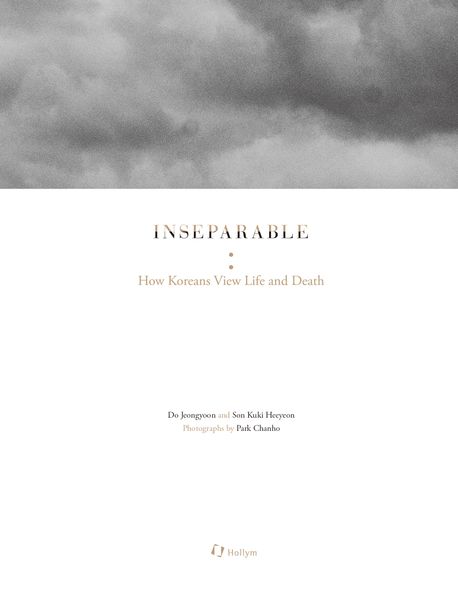
책소개"삶과 죽음은 분리될 수 없는 하나의 여정임을 문학적 서사로 풀어내다"
"A moving exploration of how Koreans understand death not as an end, but as a continuation of life."
삶과 죽음의 경계에서 한국인은 어떻게 이별해 왔는가
이 책은 한국인이 삶과 죽음을 어떻게 이해하고 받아들여 왔는지를 장례 의례와 민속 신앙, 문학적 서사를 통해 이해하기 쉬우면서도 깊이 있게 조명한다. 죽음을 끝이 아닌 또 하나의 여정으로 바라보는 한국인의 세계관 속에서 떠나는 자와 남은 자는 단절되지 않고 끊임없이 연결된다. 『INSEPARABLE』은 그 연결의 방식과 감정, 공동체적 지혜를 섬세한 언어로 풀어낸다.
떠나는 이를 부르고 인도하다
초혼은 한국 전통 장례의 시작이다. 이름을 세 번 부르는 행위에는 떠나는 이를 쉽게 보내지 못하는 마음과 마지막까지 붙잡고 싶은 절절함이 담겨 있다. 망자를 인도하기 위해 등장하는 저승사자는 단순한 공포의 존재가 아니라 두려운 저승길을 함께 걸어주는 안내자로 묘사된다. 이 책은 초혼과 저승사자를 통해 한국인이 죽음을 ‘혼자 가는 길’로 두지 않았음을 보여 준다.
영혼을 달래고 마음을 씻다
씻김굿은 죽은 이를 위한 의례이자 살아 있는 이를 위한 치유의 과정이다. 이승에 남은 한과 슬픔을 물로 씻어내며 영혼이 좋은 곳으로 갈 수 있도록 길을 닦는다. 굿판에서 울려 퍼지는 노래와 몸짓은 죽은 자를 위로하는 동시에 남은 자의 마음을 다독인다. 한국의 장례는 이처럼 애도의 시간을 공동체적 치유로 확장시킨다.
마지막을 준비하는 삶의 태도
수의와 반함, 꽃상여는 죽음을 미리 준비하는 한국인의 태도를 잘 보여 준다. 윤달에 수의를 준비하고 실에 매듭을 짓지 않으며 저승길에 먹을 밥과 쓸 돈을 챙겨 주는 풍습에는 “부디 편안히 가라”는 마음이 담겨 있다. 꽃상여와 꼭두는 마지막 길마저 외롭지 않게 해 주려는 배려의 상징이다.
울음으로 이어지는 관계
곡소리는 단순한 슬픔의 표현이 아니다. 끊임없이 이어지는 곡은 망자가 길을 잃지 않도록 비추는 소리이자 남은 이들이 슬픔을 끝까지 비워 내기 위한 의식이다. 울음은 죽음을 밀어내는 것이 아니라 받아들이기 위한 과정이며 다시 살아가기 위한 준비이기도 하다.
삶의 시작과 끝이 만나는 지점
한국에는 다른 문화에서는 찾아볼 수 없는 독특한 태무덤 문화가 있다. 이 책은 태무덤을 통해 한국인의 생명관을 조명한다. 태를 생명으로 여기고 조상과 후손을 하나의 끈으로 잇는 태무덤은 삶과 죽음이 결코 분리되지 않은 연속선상에 있음을 상징한다. 한국인의 사생관에서 삶은 죽음으로부터 이어지고 죽음은 다시 삶으로 연결된다.
몽환과 현실을 잇는 사진
책의 각 장마다 한국의 제의 전통과 죽음의 의미를 오랫동안 탐구해 온 사진작가 박찬호의 작품이 실려 있다. 그의 사진은 신화와 샤머니즘의 상징성을 품은 몽환적인 분위기 속에서도 지극히 현실적인 감각에 닿아 있다. 문학적 텍스트에 더해진 박찬호 작가의 이미지는 죽음을 둘러싼 한국인의 정서와 의례를 시각적으로 확장하며 독자의 사유를 한층 깊은 층위로 이끈다.
끝이 아닌, 이어짐의 이야기
이 책은 죽음을 두려움의 대상으로만 보지 않는다. 대신, 보내는 이와 떠나는 이가 서로를 돌보고 배웅하는 과정의 하나로 죽음을 바라본다. 문학적 서사와 전통 의례를 통해 이 책은 묻는다. 우리는 어떻게 이별해 왔는가, 그리고 어떻게 다시 살아가고 있는가. 삶과 죽음은 분리될 수 없는 하나의 여정이다. 이 책은 그 여정을 한국인의 시선으로 조용히 그러나 깊이 있게 기록한다.
Death as Continuation, Not an Ending
In many cultures, death marks a definitive end. In Korean tradition, however, death is understood as a continuation-a passage within a much larger cycle of life. INSEPARABLE explores this distinctive worldview through Korea’s rituals, beliefs, and emotional practices surrounding death, revealing how the living and the departed remain deeply connected.
Accompanying the Departed
Rather than approaching death with finality or fear, Korean culture treats it as a transition that must be carefully prepared for, guided, and accompanied. This book introduces readers to traditional funeral rites such as chohon (summoning the spirit), ssitgimgut (purification rituals), banham (placing rice in the deceased’s mouth), kkotsangyeo (flower-adorned biers), and sasipgujae (the forty-ninth-day memorial rites). Each ritual reflects a profound desire to ensure that the departed do not walk alone on their final journey.
Consoling the Spirit, Healing the Living
Central to the Korean view of death is the belief that the soul does not vanish abruptly. It lingers, hesitates, and requires comfort and guidance. Funeral rituals therefore serve a dual purpose: they lead the spirit safely to the afterlife while also consoling those left behind. The wailing cry (goksori), for example, is not merely an expression of grief but a sound believed to illuminate the path for the deceased, preventing them from losing their way. In this sense, mourning becomes an act of care, and sorrow becomes a form of companionship.
Where Life Begins and Ends
The book also examines Korea’s unique understanding of life’s origins through the tradition of taemudeom, the placental chamber. By honoring the placenta-the very beginning of life-with burial rites as significant as those for the body, Korean culture reveals a worldview in which birth and death are inseparably linked. Life does not begin solely at birth, nor does it end at death; both exist along an unbroken continuum connecting ancestors and descendants.
Rituals of Beauty and Dignity
Blending shamanistic, Buddhist, and Confucian influences, Korean funeral culture does not seek to hide death but to face it with beauty, dignity, and communal presence. Food, clothing, song, and ceremony are offered to the departed as acts of generosity-much like preparing a loved one for a long journey. These rituals express respect not only for the dead but also for the relationships that persist beyond separation.
An Invitation to Understanding
Written with empathy and clarity, INSEPARABLE avoids technical abstraction in favor of human stories, poetic reflections, and visual documentation. It welcomes readers unfamiliar with Korean culture, encouraging understanding and emotional resonance rather than detached explanation. In doing so, the book speaks to a universal longing-to believe that parting does not mean disappearance, and that love continues beyond death.
Images Bridging the Dreamlike and the Real
Each chapter of the book is accompanied by works by visual artist Park Chanho, who has long explored Korea’s ritual traditions and the profound question of death. His photographs carry a dreamlike atmosphere rich in mythic and shamanistic symbolism, while remaining deeply grounded in tangible reality. Placed alongside the literary text, Park’s images visually expand the emotional landscape and ritual sensibilities surrounding death in Korean culture, guiding readers toward deeper reflection.
Forever Inseparable
Ultimately, INSEPARABLE invites readers to reconsider death not as an ending, but as an invitation: an invitation to remember, to accompany, and to accept the inevitable with tenderness. Through the Korean perspective, death becomes something that binds the living and the departed together-forever inseparable.
상세이미지 저자소개저자 : 도정윤
시를 쓰며 글을 시작했고 이후 카피라이터이자 크리에이티브 디렉터로 오랫동안 일해 왔다. 언어가 사람의 마음과 선택에 어떤 흔적을 남기는지를 고민하며 수많은 광고와 메시지를 만들어 왔고 현재는 대학에서 카피라이팅을 가르치고 있다. 이제 그는 타인을 설득하는 언어에서 한 걸음 물러나 삶을 이루는 근원적인 감정과 태도를 탐구하는 글쓰기에 집중하고 있다. 이 책은 시와 광고, 교육의 현장을 거쳐 온 그의 언어가 속도와 효율을 지나 사유와 성찰의 방향으로 옮겨간 결과물로, 한국인의 삶을 바라보는 깊고 차분한 시선을 담아낸다.
Do Jeongyoon began writing through poetry and went on to work for many years as a copywriter and creative director. While crafting countless advertisements and messages, she has reflected on how language leaves traces on people’s emotions and choices. She currently teaches copywriting at a university. Stepping back from persuasive language, she now focuses on writing that explores the fundamental emotions and attitudes that shape human life. This book represents a turning point in her language-refined through poetry, advertising, and education-moving beyond speed and efficiency toward contemplation and reflection, and offering a calm yet profound perspective on Korean life.
저자 : 손희연
언어와 시각 표현을 오가며 카피라이팅과 디자인을 아우르는 작업을 이어 왔다. 글에서 출발해 이미지와 구조로 사고를 확장해 왔으며 새로운 형식과 매체를 탐구하는 데 지속적인 관심을 두고 있다. 현재는 북미 지역을 중심으로 한국 문화를 소개하는 광고·이벤트 회사에서 카피와 프로젝트 기획을 맡고 있으며 오디오북 낭독과 시나리오 집필 등 목소리와 서사를 매개로 한 작업으로 활동 영역을 넓혀 가고 있다. 이 책에서는 언어와 이미지에 대한 감각을 바탕으로 삶을 둘러싼 장면과 감정을 차분한 시선으로 포착한다.
Son Kuki Heeyeon has worked across copywriting and design, moving fluidly between language and visual expression. Beginning with writing, she has expanded her thinking through images and structure, maintaining a sustained interest in exploring new forms and media. She currently works at an advertising and event company that promotes Korean culture primarily in North America, where she is responsible for copywriting and project planning. Alongside this, she continues to broaden her creative practice through audiobook narration and screenplay writing. In this book, she brings together her sensitivity to language and imagery to quietly capture the scenes and emotions that surround everyday life.
사진 : 박찬호
한국의 제의 전통과 죽음이라는 심오한 질문을 깊이 탐구해온 비주얼 아티스트. 소년 시절 어머니의 죽음은 그에게 친밀하고도 깊은 성찰을 불러일으켰고 이는 시간이 흐르며 인류 보편의 물음으로 확장되어 사진, 단편영화, 미디어아트로 표현되었다. 그의 예술적 여정은 신화, 신의 현현, 샤머니즘의 영역으로 확장되어 왔으며 전 세계에서 전시를 통해 소개되었다. 국제적으로도 주목받아 2018년 뉴욕타임즈 「Lens」에 소개되었고, 2023년에는 스위스 Gwaertler Stiftung 재단으로부터 그랜트를 수상했다.
Park Chanho is a visual artist who has delved deeply into Korea’s ritual traditions and the profound question of death. The loss of his mother in boyhood sparked an intimate, enduring reflection that, over time, expanded into a universal human inquiry, expressed through photography, short films, and media art. His artistic journey extends into the realms of mythology, divine manifestations, and shamanism, leading to exhibitions around the world. Internationally recognized, he was featured in The New York Times Lens in 2018 and received a grant from the Gwaertler Stiftung Foundation in Switzerland in 2023.
목차서문
AUTHORS' NOTE: As with life today, May tomorrow's death be a beautiful blessing - 008
PART 1: AN INVITATION TO ETERNAL TIME
Chohon (Summoning the Deceased's Spirit): Calling the Spirit of the Departed from This World - 014
Jeoseung Saja (Grim Reaper): A Guide Who Leads the Way to the Afterlife - 022
Ssitgimgut (Purification Ritual): Washing the Spirit of the Dead and Leading It to a Good Place - 030
Suui (Shroud): The Last Clothes in This World - 040
Goksori (Wailing Cry): A Lament Expressing Deep Grief - 050
Taemudeom (Placental Chamber): The Cord That Connects Me to My Ancestors - 060
PART 2: JOURNEY TO A PLACE OF NO RETURN
Banham (Placing Rice in the Deceased's Mouth): Seed Money for the Afterlife - 072
Kkotsangyeo (Flower-Adorned Bier): Walking the Flower Path to a Place Beyond the Sky - 080
Pungsujiri & Myotjari (Feng Shui & Grave Sites): Dreaming of Wealth and Honor for Generations to Come - 092
Sasipgujae (49th Day Memorial Service): Seven Seven-Day Rites, Wishing for a Better Rebirth - 104
Hwansaeng (Reincarnation): Endless Journey from Karma to Karma - 114
PART 3: FESTIVAL FOR THE DEPARTED AND THE LIVING
Samiljang (Three-Day Funeral Service): Parting Together, Doing Your Best - 124
Sangyeosori (Funeral Procession Song): Epic of Life and Death - 134
Jangryenori (Funeral Play): Crying and Laughing, Leaving and Sending - 146
Noje (Road Rites): Greetings on the Way Out - 156
PART 4: MEMORIES ENGRAVED IN THE MIND AND HEART
Sinju (Ancestral Tablet): House of the Spirit of the Dead - 166
Samnyeonsang (Three-Year Mourning Period): Returning Grace and Completing Three Years of Mourning - 178
Sabugok (Song of a Widow Missing Her Husband): Tragic Love That Transcends Death - 188
Bujangpoom (Tomb Furnishings): Connecting Past and Present - 198
Gijesa & Charye (Death Anniversary Customs & Ancestral Rites on Holidays): Gathering Every Year to Remember - 206 |
| 교환 및 환불 가능 |
상품에 문제가 있을 경우 |
1) 상품이 표시/광고된 내용과 다르거나 불량(부패, 변질, 파손, 표기오류, 이물혼입, 중량미달)이 발생한 경우 - 신선식품, 냉장식품, 냉동식품 : 수령일 다음날까지 신청 - 기타 상품 : 수령일로부터 30일 이내, 그 사실을 안 날 또는 알 수 있었던 날로부터 30일 이내 신청 2) 교환 및 환불신청 시 판매자는 상품의 상태를 확인할 수 있는 사진을 요청할 수 있으며 상품의 문제 정도에 따라 재배송, 일부환불, 전체환불이 진행됩니다. 반품에 따른 비용은 판매자 부담이며 환불은 반품도착일로부터 영업일 기준 3일 이내에 완료됩니다. |
|
단순변심 및 주문착오의 경우 |
1) 신선식품, 냉장식품, 냉동식품 재판매가 어려운 상품의 특성상, 교환 및 환불이 어렵습니다. 2) 화장품 피부 트러블 발생 시 전문의 진단서 및 소견서를 제출하시면 환불 가능합니다. 이 경우 제반비용은 소비자 부담이며, 배송비는 판매자가 부담합니다. 해당 화장품과 피부 트러블과의 상당한 인과관계가 인정되는 경우 또는 질환치료 목적의 경우에는 진단서 발급비용을 판매자가 부담합니다. 3) 기타 상품 수령일로부터 7일 이내 신청, 왕복배송비는 소비자 부담 4) 모니터 해상도의 차이로 색상이나 이미지가 다른 경우 단순변심에 의한 교환 및 환불이 제한될 수 있습니다. |
|
| 교환 및 환불 불가 |
1) 신청기한이 지난 경우 2) 소비자의 과실로 인해 상품 및 구성품의 전체 또는 일부가 없어지거나 훼손, 오염되었을 경우 3) 개봉하여 이미 섭취하였거나 사용(착용 및 설치 포함)해 상품 및 구성품의 가치가 손상된 경우 4) 시간이 경과하여 상품의 가치가 현저히 감소한 경우 5) 상세정보 또는 사용설명서에 안내된 주의사항 및 보관방법을 지키지 않은 경우 6) 사전예약 또는 주문제작으로 통해 소비자의 주문에 따라 개별적으로 생산되는 상품이 이미 제작진행된 경우 7) 복제가 가능한 상품 등의 포장을 훼손한 경우 8) 맛, 향, 색 등 단순 기호차이에 의한 경우 |
|



 카테고리
카테고리
