

| 상품 안내 및 환불, 교환, 배송문의 | |
| - 가게 전화번호 : | 1544-1900 |
| - 전화문의 시간 : |
오전 9시부터 오후 6시까지 (매주 월요일, 화요일, 수요일, 목요일, 금요일, 공휴일 제외) |
| - 가게 이메일 : | ink@kyobobook.co.kr |
| - 이용 택배회사 : | CJ대한통운 |
|
판매가게정보 |
|
| - 사업자명 : | (주)교보문고 |
| - 사업자등록번호 : | 102-81-11670 |
| - 통신판매업신고 : | 01-0653 |
|
- 현금영수증 : 발급가능 |
|
|
전화주문 및 결제문의 |
|
| - 꽃피는 아침마을 : | 1644-8422 |
|
가게와 직거래를 하시면 꽃송이 적립 및 각종 혜택에서 제외되고, 만일의 문제가 발생하는 경우에도 꽃마의 도움을 받으실 수 없습니다. 가게의 부당한 요구, 불공정 행위 등에 대해서도 꽃마로 직접 전화주세요. |
|

| 상세정보 | 구매후기 (0) | 상품Q&A (0) | 배송/교환/환불 안내 |
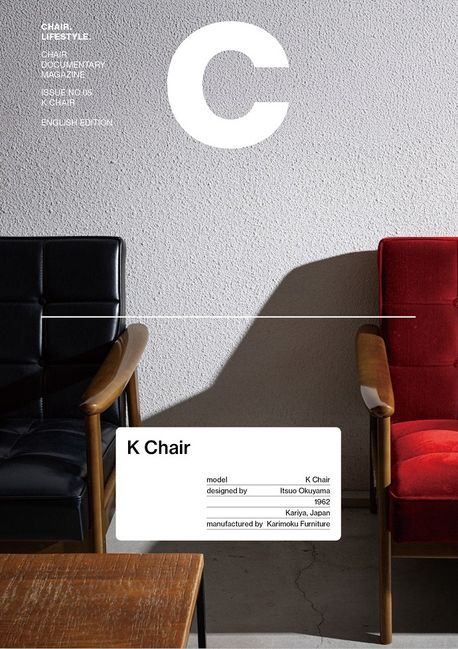
책소개The K chair, first introduced by Karimoku Furniture in 1962, is a sleek and durable example of a “long-life design” firmly rooted in authenticity. Symbolic in form and meaning, the chair shaped Karimoku’s identity through its refined craftsmanship, care, and sincerity. In 2002, designer Kenmei Nagaoka reintroduced it as the Karimoku 60, spurring renewed attention and wider recognition. Easy to assemble, disassemble, and repair, the K Chair retains a timeless appeal, inviting users to rediscover the beauty and value of everyday objects.
In this issue, Magazine C explores how the K Chair integrates into everyday life across five cities-Tokyo, Singapore, Taichung, Seoul, and Kyoto-through the perspectives of its users. The team also visited Karimoku Furniture’s headquarters and factory to document the K Chair’s history and production process in depth. In addition, the issue features a special interview with Kenmei Nagaoka, creative director of Karimoku 60, as well as conversations with world-renowned designers such as Kenya Hara and BIG-GAME. Together, these stories illuminate the spirit of monozukuri and the enduring power of long-life design that the K Chair embodies.
상세이미지 목차02 Intro
08 Letter From C
A word from the publisher
12 Quotes
Words from world-renowned designers and architects paying tribute to Karimoku Furniture’s passion and craftsmanship.
14 5 Cities, 5 Homes
Those who choose Karimoku 60’s K Chair believe in the value of skill, philosophy, sincerity, and care
We visit the homes of people who cherish everyday life and live with intention to capture diverse scenes of the K Chair
Tokyo, David Buchler / Artist & Koichi Tanabe / Web Designer
Singapore, Wu Yan Long / Graphic Designer & Artist
Taichung, Wei Liao / Graphic Designer
Seoul, Suyel Bae / Co-founder of MMMG
Kyoto, Tatsuro & Naoko Funayama / Couple
56 Karimoku Family
Tracing three generations of Karimoku Furniture - from a small woodworking factory to a brand that has upheld essence over efficiency
62 Iconic Chair
First introduced in 1962 as Karimoku Furniture’s inaugural self-branded product, the K Chair embodies the company’s design philosophy through its neat form, sturdy structure, and accessible price
68 Karimoku House
A warm and comfortable interior styled entirely with Karimoku 60 furniture-defined by subtle hues, functional usability, and delicate details
75 About Karimoku Furniture
Founded in 1940 by Shohei Kato in Kariya, Aichi Prefecture, Karimoku Furniture has grown from a small woodworking studio into Japan’s leading furniture manufacturer, bridging its past, present, and future
80 Karimoku Perspectives
Through its sub-brands - Karimoku New Standard (KNS), Karimoku Case, and MAS - the company continues to practice respect for wood, spatial philosophy, and the pursuit of truly good furniture
88 Defining Karimoku
An interview with Masatoshi Kato, President of Karimoku Furniture, the third-generation leader expanding the family business while upholding his forebears’ craftsmanship
92 The Karimoku Spirit
A conversation with Ikuji Yamada, Executive Director of Karimoku Furniture, who has spent over four decades mastering diverse fields within the company and helped create Karimoku 60 with Kenmei Nagaoka
96 High-tech & High-touch
Inside the Karimoku Furniture factory, where advanced automation handles precision work and artisans’ delicate hands elevate the final quality
110 Karimoku People
From wood-drying to processing, polishing, assembly, upholstering, inspection, and delivery - eleven workers share their thoughts on the entire journey behind each piece of furniture
114 Digest
From wood-drying to processing, polishing, assembly, upholstering, inspection, and delivery - eleven workers share their thoughts on the entire journey behind each piece of furniture
118 Special Interview - Kenmei Nagaoka
A dialogue with Kenmei Nagaoka - design activist, champion of long-life design, and creative director of Karimoku 60 - who revived the K Chair for a new generation
126 Long-life Object
Objects curated by D&DEPARTMENT stores in Japan and Korea that embody not only the maker’s hand but also the curator’s philosophy of long-life design
140 Opinion - Naomi Pollock
Architect & Journalist Naomi Pollock on the Japanese concept of monozukuri through the K Chair - a reflection on the quiet devotion of those who make things with utmost care
148 Viewing Rooms
From caf?s that welcome new guests every day to artists’ studios that feel like home, scenes of the K Chair offering moments of comfort wherever it is placed
148 Opinion - Kenya Hara
Designer and educator Kenya Hara on the K Chair’s quiet yet enduring presence - a long-life design shaped by Japanese aesthetics and sustained by daily life
162 Modern Japan
Food - Acacia, a restaurant representing Y?shoku - Western-inspired Japanese cuisine evolved uniquely within Japan’s food culture
Interior Design - Villa Serena, a 1960s urban mansion that set new standards for practical and hygienic living in Japan
Architecture - The National Museum of Modern Art, Tokyo, where Western spatial functions merge with the Japanese sensibility of place
Fashion - Beams, a lifestyle select store that introduced the idea of selling an American lifestyle rather than just products
180 Opinion - BIG-GAME
An interview with BIG-GAME, the design studio that collaborates with Karimoku New Standard to create “global furniture from local wood”
186 New Wave
The next generation of Karimoku Furniture - from Standard A in Korea to Kumano in Japan - expanding the possibilities of wood with timeless yet contemporary sensibilities
192 Chairpunk
A reinterpretation of the K Chair by Studio EAEA, a furniture studio that champions warmth and accessibility through wood
194 Chair Index
My favorite chair
196 Outro
출판사 서평■ About C
Magazine C, co-created by Grandeclip and brand-based periodical Magazine B, is a documentary magazine that focuses on one iconic chair in every issue, introducing the design and lifestyle people build around it. Through a deep dive into the industry and chairs of all kinds-from ones seen on the street to icons that have shaped public spaces-Magazine C aims to shine a light on designers, brands, manufacturers, collectors, and chair enthusiasts, as well as uncover how each design has changed contemporary life.
Grandeclip is a startup launched by Bongjin Kim, the founder of Korean food delivery platform Baemin. Under the business ethos of “Do small things in a great way,” Grandeclip endeavors to discover and highlight the value of seemingly small or everyday things-like a clip. |
| 교환 및 환불 가능 |
상품에 문제가 있을 경우 |
1) 상품이 표시/광고된 내용과 다르거나 불량(부패, 변질, 파손, 표기오류, 이물혼입, 중량미달)이 발생한 경우 - 신선식품, 냉장식품, 냉동식품 : 수령일 다음날까지 신청 - 기타 상품 : 수령일로부터 30일 이내, 그 사실을 안 날 또는 알 수 있었던 날로부터 30일 이내 신청 2) 교환 및 환불신청 시 판매자는 상품의 상태를 확인할 수 있는 사진을 요청할 수 있으며 상품의 문제 정도에 따라 재배송, 일부환불, 전체환불이 진행됩니다. 반품에 따른 비용은 판매자 부담이며 환불은 반품도착일로부터 영업일 기준 3일 이내에 완료됩니다. |
|
단순변심 및 주문착오의 경우 |
1) 신선식품, 냉장식품, 냉동식품 재판매가 어려운 상품의 특성상, 교환 및 환불이 어렵습니다. 2) 화장품 피부 트러블 발생 시 전문의 진단서 및 소견서를 제출하시면 환불 가능합니다. 이 경우 제반비용은 소비자 부담이며, 배송비는 판매자가 부담합니다. 해당 화장품과 피부 트러블과의 상당한 인과관계가 인정되는 경우 또는 질환치료 목적의 경우에는 진단서 발급비용을 판매자가 부담합니다. 3) 기타 상품 수령일로부터 7일 이내 신청, 왕복배송비는 소비자 부담 4) 모니터 해상도의 차이로 색상이나 이미지가 다른 경우 단순변심에 의한 교환 및 환불이 제한될 수 있습니다. |
|
| 교환 및 환불 불가 |
1) 신청기한이 지난 경우 2) 소비자의 과실로 인해 상품 및 구성품의 전체 또는 일부가 없어지거나 훼손, 오염되었을 경우 3) 개봉하여 이미 섭취하였거나 사용(착용 및 설치 포함)해 상품 및 구성품의 가치가 손상된 경우 4) 시간이 경과하여 상품의 가치가 현저히 감소한 경우 5) 상세정보 또는 사용설명서에 안내된 주의사항 및 보관방법을 지키지 않은 경우 6) 사전예약 또는 주문제작으로 통해 소비자의 주문에 따라 개별적으로 생산되는 상품이 이미 제작진행된 경우 7) 복제가 가능한 상품 등의 포장을 훼손한 경우 8) 맛, 향, 색 등 단순 기호차이에 의한 경우 |
|



 카테고리
카테고리
