

| 상품 안내 및 환불, 교환, 배송문의 | |
| - 가게 전화번호 : | 1544-1900 |
| - 전화문의 시간 : |
오전 9시부터 오후 6시까지 (매주 월요일, 화요일, 수요일, 목요일, 금요일, 공휴일 제외) |
| - 가게 이메일 : | ink@kyobobook.co.kr |
| - 이용 택배회사 : | CJ대한통운 |
|
판매가게정보 |
|
| - 사업자명 : | (주)교보문고 |
| - 사업자등록번호 : | 102-81-11670 |
| - 통신판매업신고 : | 01-0653 |
|
- 현금영수증 : 발급가능 |
|
|
전화주문 및 결제문의 |
|
| - 꽃피는 아침마을 : | 1644-8422 |
|
가게와 직거래를 하시면 꽃송이 적립 및 각종 혜택에서 제외되고, 만일의 문제가 발생하는 경우에도 꽃마의 도움을 받으실 수 없습니다. 가게의 부당한 요구, 불공정 행위 등에 대해서도 꽃마로 직접 전화주세요. |
|

| 상세정보 | 구매후기 (0) | 상품Q&A (0) | 배송/교환/환불 안내 |
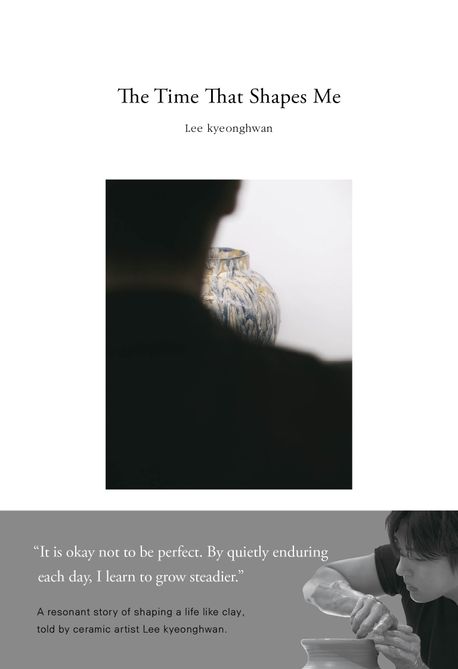
책소개“While shaping the clay, I learned how to comfort myself.”
Instead of striving for the perfection defined by the world,
I decided to live in the shape that feels most "true to myself."
A record of the most honest and resilient self-discovery by ceramic artist Lee kyunghwan,
embracing even my anxiety and wounds as an integral part of who I am.
We live every day pretending to be okay. The obsession with living in the "normal person’s mold" that the world has set for us, without a single flaw, slowly wears us down. We feel that only perfection will make us worthy of love, and that if we fall apart, it’ll be irreversible. So, we keep pushing forward, always looking ahead. But at some point, we suddenly realize: When did I become so distant from myself?
Shaping Time is a record of life written by Lee kyeonghwan, a ceramic artist, model, and influencer who actively engaged with the world. In this work, he confronts clay, a medium that doesn’t lie. If handled in haste, it twists easily, and anxious hands leave marks. The more he strived for perfection, the more it crumbled. But when he stopped, calmed his mind, and allowed himself to breathe, the clay slowly found its own form.
Through pottery, he discovered truths about life: that clay hardens not because it avoids fire, but because it faces it; and that in moments of anxiety and trials we, too, find our own unique texture. This book is a record of his realization. Though the phrase "It's okay to not be perfect" may sound clich?, within his words, it transforms from mere comfort to lived experience. Just as he gazes at a dented cup and says, "This shape is better," here is a way of living where even flaws become part of the process. Like the surface of pottery, it might not shine, but each time you hold it, there’s warmth that touches the heart.
Reading this book will not be about peeking into someone else's success story. Instead, it will be a time to quietly examine the anxieties within you. It will be an opportunity to step out of the molds set by society and practice breathing at your own pace. Just as he comforted himself by shaping clay, you, too, will find yourself quietly saying, “Ah, I get it now,” as you follow his words.
"What shape are you living in right now? Have you become too rigid, with no space for your heart to breathe? Just like clay needs water to come to life, you too can soften again. Enter the time of shaping yourself, just as you would shape clay. Your anxious days will slowly warm up, and you will eventually be shaped firmly into your true self."
상세이미지 목차Prologue
Chapter 1
The time when I meet myself
The cup I made fell out of shape, and somehow, I loved it
The reason I couldn’t let it go
When anxiety finds me
When a quiet person is sincere
Not ‘Why,’ But ‘I hear you’
It was on the ground that I found my strength
Understanding too much makes me disappear
The warmth left at my fingertips
The memory of my first bowl
Why I chose this path
How to endure discomfort
The bowl most like me
When the clay answers
Chapter 2
The time that shapes me
Are you anxious
What is learned only by facing it
I won’t shape myself to others’ standards
Familiar doesn’t always mean good
Each day may look the same, but it never truly is
Even a wrong choice was still a path
Growth I found in my time alone
I’ve set my standard for others
The practice of centering
My own measure
The difference small habits make
It’s okay to start again
Doing only as much as I can
It is okay not to be perfect
Chapter 3
The time that fires me
The belief that we can be understood
without words is just an illusion
The heart hidden behind a smile
Feelings don’t disappear just because you hide them
Often, I regret not speaking
The truest words are always saved for last
More than words, the mood is remembered
Just started for love, and it led me here
Lessons forged only in fire
How to let emotions flow
Even anxiety is a material
Chapter 4
The time to live as myself
Applauding the person I am now
Life is shaped, slowly and solidly
Achievements known only to me
A small luxury found in the familiar
The face of an uneventful day
Those who stay beside me in silence
There is a temperature between people
Traces left in my hands
A few people I can lean on
Even a flawed bowl still has its use
It’s okay to be slow
A day of refilling
출판사 서평The Things Imperfection Taught Me
Sometimes, there are moments when our hearts crumble without reason. It's when the desire to do well overwhelms us, and in trying too hard, we crack. Even though we know we should rest, it’s been so long since we remembered how to, that by the end of the day, both body and mind are exhausted. Perhaps we've been trying too hard to appear as "a kind person to everyone," forgetting that it's okay to be imperfect.
Ceramic artist Lee kyeonghwan is someone who took a step back from that constant striving. Having lived under the spotlight more than most, he one day turned away from all the attention and sat quietly before the clay. Instead of choosing glamour, he chose slowness; instead of competition, he chose calm. What he learned through shaping clay was a way of life that could not be explained by society's standards. The clay showed him not perfection, but his "true pace." And the warmth of his hands slowly became a language of self-restoration.
This book is a record of reflections written in that language. Like shaping clay, the author molds his heart, and just as clay endures the heat of the kiln, he passes through emotions, writing them down carefully on each page.
The author says, “Clay doesn’t speak, but it always answers.” On hurried days, it crumbles easily; on calm days, smooth lines emerge from his fingertips. And through this, he makes us realize that our anxiety is not a mistake, but simply an "unfinished form" that is still being shaped.
Warm Sentences That Make You Realize It's Okay to Be Imperfect
Lee kyeonghwan's writing is heavy, yet not cold like clay. His words aren't glamorous, but they touch something deep inside, leaving a lasting resonance. As you read each line, you start to feel not a sense of obligation to "live the day well," but a quiet desire to "look at myself more closely." The heart, which had stiffened in order to fit into the world, slowly begins to loosen, and the phrase "It's okay not to be okay" comes to you as a heartfelt comfort.
Shaping Time is not only the story of an artist who chooses to look inward before seeking external glamour, but also the story of anyone who has tried not to lose themselves amid anxiety. It is a journey to standing in one's own shape, not a perfect form, but a true one. This book captures that journey through the warmth of clay and the texture of the heart.
If, right now, you’re feeling overwhelmed by not fitting anyone's expectations, I recommend you slowly open this book. The quietness that seeps between the author’s words will gently cover your heart. The phrase "It's okay not to be perfect," which is so obvious yet often forgotten, may suddenly strike you deeply. Just as clay remembers the marks left by hands, your life will remember this moment. And that memory will, one day, become the firm shape of who you truly are. |
| 교환 및 환불 가능 |
상품에 문제가 있을 경우 |
1) 상품이 표시/광고된 내용과 다르거나 불량(부패, 변질, 파손, 표기오류, 이물혼입, 중량미달)이 발생한 경우 - 신선식품, 냉장식품, 냉동식품 : 수령일 다음날까지 신청 - 기타 상품 : 수령일로부터 30일 이내, 그 사실을 안 날 또는 알 수 있었던 날로부터 30일 이내 신청 2) 교환 및 환불신청 시 판매자는 상품의 상태를 확인할 수 있는 사진을 요청할 수 있으며 상품의 문제 정도에 따라 재배송, 일부환불, 전체환불이 진행됩니다. 반품에 따른 비용은 판매자 부담이며 환불은 반품도착일로부터 영업일 기준 3일 이내에 완료됩니다. |
|
단순변심 및 주문착오의 경우 |
1) 신선식품, 냉장식품, 냉동식품 재판매가 어려운 상품의 특성상, 교환 및 환불이 어렵습니다. 2) 화장품 피부 트러블 발생 시 전문의 진단서 및 소견서를 제출하시면 환불 가능합니다. 이 경우 제반비용은 소비자 부담이며, 배송비는 판매자가 부담합니다. 해당 화장품과 피부 트러블과의 상당한 인과관계가 인정되는 경우 또는 질환치료 목적의 경우에는 진단서 발급비용을 판매자가 부담합니다. 3) 기타 상품 수령일로부터 7일 이내 신청, 왕복배송비는 소비자 부담 4) 모니터 해상도의 차이로 색상이나 이미지가 다른 경우 단순변심에 의한 교환 및 환불이 제한될 수 있습니다. |
|
| 교환 및 환불 불가 |
1) 신청기한이 지난 경우 2) 소비자의 과실로 인해 상품 및 구성품의 전체 또는 일부가 없어지거나 훼손, 오염되었을 경우 3) 개봉하여 이미 섭취하였거나 사용(착용 및 설치 포함)해 상품 및 구성품의 가치가 손상된 경우 4) 시간이 경과하여 상품의 가치가 현저히 감소한 경우 5) 상세정보 또는 사용설명서에 안내된 주의사항 및 보관방법을 지키지 않은 경우 6) 사전예약 또는 주문제작으로 통해 소비자의 주문에 따라 개별적으로 생산되는 상품이 이미 제작진행된 경우 7) 복제가 가능한 상품 등의 포장을 훼손한 경우 8) 맛, 향, 색 등 단순 기호차이에 의한 경우 |
|



 카테고리
카테고리
