

| 상품 안내 및 환불, 교환, 배송문의 | |
| - 가게 전화번호 : | 1544-1900 |
| - 전화문의 시간 : |
오전 9시부터 오후 6시까지 (매주 월요일, 화요일, 수요일, 목요일, 금요일, 공휴일 제외) |
| - 가게 이메일 : | ink@kyobobook.co.kr |
| - 이용 택배회사 : | CJ대한통운 |
|
판매가게정보 |
|
| - 사업자명 : | (주)교보문고 |
| - 사업자등록번호 : | 102-81-11670 |
| - 통신판매업신고 : | 01-0653 |
|
- 현금영수증 : 발급가능 |
|
|
전화주문 및 결제문의 |
|
| - 꽃피는 아침마을 : | 1644-8422 |
|
가게와 직거래를 하시면 꽃송이 적립 및 각종 혜택에서 제외되고, 만일의 문제가 발생하는 경우에도 꽃마의 도움을 받으실 수 없습니다. 가게의 부당한 요구, 불공정 행위 등에 대해서도 꽃마로 직접 전화주세요. |
|

| 상세정보 | 구매후기 (0) | 상품Q&A (0) | 배송/교환/환불 안내 |
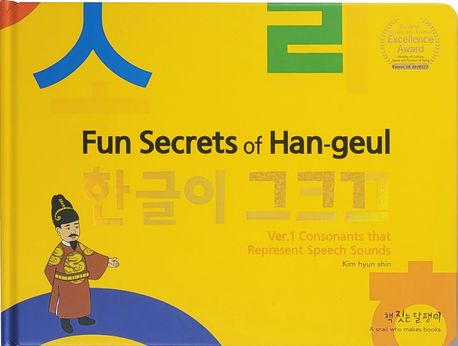
책소개VER.1 - Consonants that Represent Speech Sounds
Hangul-i Geu Keu Kkeu (The Fun Secrets of Hangul) is an interactive paper book designed to let users physically experience the principles behind the creation of Hangul. By moving and combining letters and building syllabic structures on their own, users explore Hangul playfully and come to understand its logic intuitively. This is not a simple educational tool, but a tactile content experience designed to let users feel the scientific and creative spirit of Hangul -and of King Sejong-through their own hands and bodies. The work also extends into a video book format. When users engage with the printed book alongside the video, narration, sound, and visual elements help guide interaction more clearly and effectively. From young children to adult learners and foreign users alike, anyone can move beyond simply “seeing” Hangul to creating, combining, and truly experiencing it.
한글은 왜 이렇게 생겼어요? 라는
아이의 호기심 가득한 질문으로 이 책은 시작되었습니다.
한글은 과학적인 문자라고 익히 알고 있었지만, 이 질문에 바로 대답할 수 없었습니다.
도대체 어떤 과학적 원리가 있는 걸까? 왜 세종대왕은 한글을 이런 모양으로 만들었을까?
아이의 질문에 답을 찾아주고 싶었던 저자는 훈민정음 해례본을 살펴보게 되었고,
글자 모양에 숨겨진 비밀을 따라가다, 그 모양에 담긴 한글 창제 정신에 깊이 감동하였습니다.
그리고 그 감동을 아이와 나누기 위해, 한글 창제 원리를 쉽게 알 수 있도록,
손으로 움직여 보면서 탐구할 수 있는 책을 만들었습니다.
이 책은 한글을 처음 접하는 어린아이와, 한글을 배우고 싶은 외국인들에게
한글 원리를 통해 재미있게 한글을 익힐 수 있도록 도와줍니다.
무엇보다, 글자 모양에 담긴 세종대왕의 꿈과 열정을 생각해 보는 계기가 될 것입니다.
한글은 누구나 쉽게 사용할 수 있는 쉬운 글자이지만, 그 안에는 깊은 철학이 담겨 있습니다.
이 책 또한 놀이 북처럼 가볍게 볼 수 있지만, 한글에 담긴 자연의 이치도 담고자 했습니다.
이러한 한글 원리를 따라가는 과정의 끝에는 누구나 글을 배워 자기 뜻을 펼칠 수 있는 세상을 꿈꾸었던 세종대왕의 한글 창제 정신에 닿을 수 있을 것입니다.
어린이는 어린이대로, 어른은 어른대로, 보는 이의 눈높이에 맞춰 한글을 탐구하고, “손으로 움직여 보는 한글 해설서”입니다.
무엇이든 원리와 배경을 알게 되면, 그 가치 또한 알게 되고 더 잘 사용할 수 있게 됩니다.
한글을 배우고 쓰는 모든 이들이 한글의 가치를 제대로 알고, 날마다 기쁜 마음으로 한글을 쓰게 되길 바랍니다.
상세이미지 저자소개저자 : 김현신
두 아이의 엄마인 저자는 어느 날 글자가 왜 이렇게 생겼냐는 아이의 질문을 받게 되었습니다.그리고 그 답을 찾아, 훈민정음 해설서인 해례본을 읽게 된 후 한글 창제원리에 감동하고 해례본의 기본 창제원리를 누구나 쉽게 이해할 수 있도록, 움직여 볼 수 있는 책으로 만들게 되었습니다.한글에 관한 작업을 꾸준히 해 오고 있으며,2018년 문화체육관광부에서 주최하는 한글창의 아이디어공모전에서 콘텐츠 분야 우수상을 받았고,세종대왕기념사업회에서 주최하는 "제14회 한글 문화상품 공모전" 아이디어 부분에서 으뜸상을 수상했습니다.
목차1. The Secrets of Hangul
2. Tongue Root Sounds
- The letter 'ㄱ', which looks like the back of the tongue.
?-We are the tongue root sound family: ㄱ, ㅋ, ㄲ
3. Tongue Sounds
?-The letter 'ㄴ', which looks like the tip of your tongue.
?-We are the tongue sound family: ㄴ, ㄷ, ㅌ, ㄸ
4. Tongue Sound Family Friends
- The letter 'ㄹ', which is shaped like your tongue.
5. Lip Sounds
-The letter 'ㅁ', which is shaped like your lips.
?-We are the lip sound family: ㅁ, ㅂ, ㅍ, ㅃ
6. Teeth (Dental) Sounds
?-The letter 'ㅅ', which has a shape like your teeth.
?-We are the teeth sound family: ㅅ, ㅈ, ㅊ, ㅉ
7. Throat Hole Sound
?-The letter 'ㅇ', which is shaped like your throat hole.
?-We are the throat hole sound family: ㅇ, ㅎ
8. Appendix
-Chart of Korean Consonants
출판사 서평Han-geul is the world’s only alphabet that was created according to the principles of how speech sounds are generated naturally. Yet, ever since their creation, the letters have been taught through the rote memorization of syllables, an approach far removed from these principles. This method is both illogical and makes learning difficult. The Fun Secrets of Han-geul is a book that allows students to learn the letters of the Korean alphabet according to the original principles that were laid down nearly 600 years ago. Understanding these principles makes Han-geul easy and fun to master, while laying a fertile ground for cultivating the ability to think scientifically and apply science practically. - Kim Seung-gwon, author of People Embrace Heaven and Earth, (on Hunmin jeong-eum Haerye-bon)
This book amply reconfirms the adage “Necessity is the mother of invention.” It is enough to make the linguistic scholars blush: a book that allows all parents to grasp the secrets of the Korean language in a game-like fashion. How wonderful it would be if we could study all fundamentals in such a fun way.
- Kang Ju-heon, translator of Tuesdays with Morrie, among other works |
| 교환 및 환불 가능 |
상품에 문제가 있을 경우 |
1) 상품이 표시/광고된 내용과 다르거나 불량(부패, 변질, 파손, 표기오류, 이물혼입, 중량미달)이 발생한 경우 - 신선식품, 냉장식품, 냉동식품 : 수령일 다음날까지 신청 - 기타 상품 : 수령일로부터 30일 이내, 그 사실을 안 날 또는 알 수 있었던 날로부터 30일 이내 신청 2) 교환 및 환불신청 시 판매자는 상품의 상태를 확인할 수 있는 사진을 요청할 수 있으며 상품의 문제 정도에 따라 재배송, 일부환불, 전체환불이 진행됩니다. 반품에 따른 비용은 판매자 부담이며 환불은 반품도착일로부터 영업일 기준 3일 이내에 완료됩니다. |
|
단순변심 및 주문착오의 경우 |
1) 신선식품, 냉장식품, 냉동식품 재판매가 어려운 상품의 특성상, 교환 및 환불이 어렵습니다. 2) 화장품 피부 트러블 발생 시 전문의 진단서 및 소견서를 제출하시면 환불 가능합니다. 이 경우 제반비용은 소비자 부담이며, 배송비는 판매자가 부담합니다. 해당 화장품과 피부 트러블과의 상당한 인과관계가 인정되는 경우 또는 질환치료 목적의 경우에는 진단서 발급비용을 판매자가 부담합니다. 3) 기타 상품 수령일로부터 7일 이내 신청, 왕복배송비는 소비자 부담 4) 모니터 해상도의 차이로 색상이나 이미지가 다른 경우 단순변심에 의한 교환 및 환불이 제한될 수 있습니다. |
|
| 교환 및 환불 불가 |
1) 신청기한이 지난 경우 2) 소비자의 과실로 인해 상품 및 구성품의 전체 또는 일부가 없어지거나 훼손, 오염되었을 경우 3) 개봉하여 이미 섭취하였거나 사용(착용 및 설치 포함)해 상품 및 구성품의 가치가 손상된 경우 4) 시간이 경과하여 상품의 가치가 현저히 감소한 경우 5) 상세정보 또는 사용설명서에 안내된 주의사항 및 보관방법을 지키지 않은 경우 6) 사전예약 또는 주문제작으로 통해 소비자의 주문에 따라 개별적으로 생산되는 상품이 이미 제작진행된 경우 7) 복제가 가능한 상품 등의 포장을 훼손한 경우 8) 맛, 향, 색 등 단순 기호차이에 의한 경우 |
|



 카테고리
카테고리
