

| 상품 안내 및 환불, 교환, 배송문의 | |
| - 가게 전화번호 : | 1544-1900 |
| - 전화문의 시간 : |
오전 9시부터 오후 6시까지 (매주 월요일, 화요일, 수요일, 목요일, 금요일, 공휴일 제외) |
| - 가게 이메일 : | ink@kyobobook.co.kr |
| - 이용 택배회사 : | CJ대한통운 |
|
판매가게정보 |
|
| - 사업자명 : | (주)교보문고 |
| - 사업자등록번호 : | 102-81-11670 |
| - 통신판매업신고 : | 01-0653 |
|
- 현금영수증 : 발급가능 |
|
|
전화주문 및 결제문의 |
|
| - 꽃피는 아침마을 : | 1644-8422 |
|
가게와 직거래를 하시면 꽃송이 적립 및 각종 혜택에서 제외되고, 만일의 문제가 발생하는 경우에도 꽃마의 도움을 받으실 수 없습니다. 가게의 부당한 요구, 불공정 행위 등에 대해서도 꽃마로 직접 전화주세요. |
|

| 상세정보 | 구매후기 (0) | 상품Q&A (0) | 배송/교환/환불 안내 |
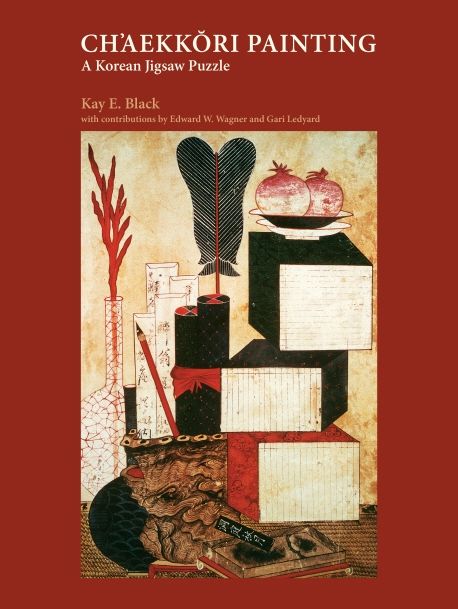
책소개책거리는 병풍 형식의 화면에 책과 도자기, 문방구, 향로, 청동기 등 선비의 책가(冊架)에 놓인 기물들을 그린 그림을 말한다. 이러한 책거리 그림은 1970년대까지도 민화 애호가들에게나 관심의 대상이었을 뿐 한국회화사에서는 별로 주목받지 못했다. 이 무렵 한국을 방문하여 책거리에 매료된 저자 케이 E. 블랙(Kay E. Black)은 이를 계기로 뒤늦게 미술사 공부를 시작하여 덴버대학교에서 석사학위를 받았다. 그녀는 국내외에 산재한 150여 점의 책거리 작품을 일일이 찾아다니며 조사하고 그 화풍과 조성 배경을 탐구하였다. 1980년대부터는 당시 조선시대 족보 연구의 권위자인 에드워드 와그너(Edward W. Wagner, 하버드대학교, 2001년 타계) 교수와 공동 연구를 통해 상당수의 책거리 그림이 궁중 화원 화가들이 그린 것이며 그 화가들이 가계에 있어 서로 긴밀히 연결되어 있었음을 처음으로 밝혀냈다. 이 책은 저자의 30여 년에 걸친 책거리에 대한 탐구를 종합적으로 정리한 연구서이다.
Ch'aekk?ri refers to paintings of books, stationery, ceramics, incense burners, bronze ware and other items found on the bookshelves of scholars, painted on folding screens in the late Chos?n period. Paintings of this theme did not receive much attention in Korean art except for a small number of folk paining lovers and collectors until the 1970s. Fascinated by ch’aekk?ri during her first visit to Korea in the mid-1970s, the author Kay E. Black started studying the subject and received her master’s degree in art history at University of Denver. Since then, she has vigorously devoted herself to research on ch’aekk?ri, visiting numerous collections in Korea, Japan, the U.S. and Europe and meticulously examining as many as 150 extant works. She also collaborated with the late Edward W. Wagner, formerly Professor of Korean history at Harvard and one of the foremost authorities on Korean genealogies, to identify ch’aekk?ri painters and their intricate family lineages. Their research discovered many of the pieces were painted by professional painters hired at the court, who were closely related in family lineages. More than thirty years of the author’s research on ch’aekk?ri is summed up in this comprehensive study.
상세이미지 저자소개저자 : Kay E. Black
케이 블랙(1928~2020)은 미국인으로 1973년 처음 한국을 방문했을 때 한국미술에 매료되어 40대에 덴버대학에서 다시 한국미술사 공부를 시작하여 석사학위를 받았다. 그 뒤 책거리를 비롯한 한국미술 연구에 몰두하여 와그너와 함께 “책거리 그림”(1993)과 “궁중 스타일 책거리”(1998) 등의 논문을 발표하였다. 또한 에카르트 데게와 함께 발표한 “상트 오틸리엔수도원 소장 정선의 진경산수화”(1999/2000)에서는 이 그림에 그려진 금강산의 시점에 대해 창의적인 해석을 제시한 바 있다.
Kay E. Black (1928-2020) received a master’s degree at the University of Denver. Her publications include such articles on ch’aekk?ri as “Ch’aekk?ri Paintings: A Korean Jigsaw Puzzle”(1993) and “Court Style Ch’aekk?ri”(1998), both coauthored with Edward W. Wagner. She also published “St. Ottilien’s Six ‘True View Landscapes’ by Ch?ng S?n” with Eckarte Dege, which presents an inspring, new interpretation of the viewing spot of Diamond Mountain in the painting.
Edward W. Wagner (1924-2001) is the late professor and founder of Korean Studies at Harvard University. He was a specialist on Chos?n dynasty history and the leading expert on Korean genealogy.
Gari Ledyard (1932-) is Sejong Professor Emeritus of Korean History at Columbia University. He wrote on diverse aspects of the Kory? and Chos?n dynasties including the invention of the Korean alphabet, Han'g?l, during the fifteenth century.
목차Foreword by Ahn Hwi-joon
Acknowledgements
List of Publications by the Author
1. Korean Ch’aekkori: Introduction
2. Ch’aekkori and the Korean Court
3. Overview of Isolated Type Ch’aekk?ri
4. Isolated Type Embroidered Ch’aekk?ri
5. Identified Artists of Isolated Type Ch’aekk?ri
6. Isolated Type Ch’aekkori by Yi Hy?ng-nok/Yi T’aek-kyun
7. An Isolated Type Ch’aekk?ri by Yi To-y?ng
8. Three Isolated Type Corner Ch’aekk?ri Screens
9. An Isolated Type Theatrical Ch’aekkori
10. Two Twentieth-Century Isolated Type Ch’aekk?ri by S?ktang
11. Overview of Trompe l’Oeil Type Ch’aekk?ri
12. Peep Box Trompe l’Oeil Type Ch’aekk?ri
13. Trompe l’Oeil Type Ch’aekk?ri at the Choson Court: A Late Chos?n Period Artist with Three Different Names
14. The Antiquarian Spirit in Trompe l’Oeil Type Ch’aekkori
15. An Atypical Ch’aekkori and Its Anonymous Painter
16. The Identification of Kang Tal-su: A New Piece in the Ch’aekkori Jigsaw Puzzle
17. A Ch’aekk?i in Honor of Kim Ki-hy?n’s Seventieth Birthday
18. A Trompe l’Oeil Theatrical Ch’aekkori
19. An Eight-Panel European Palette Trompe l’Oeil Type Ch’aekkori
20. A Two-Panel European Palette Trompe l’Oeil Type Ch’aekkori
21. Yi To-y?ng: Yangban Artist of Court Style Ch’aekkori
22. Overview of Still Life Type Ch’aekkori
23. Ch?nnam-Style Still Life Type Ch’aekk?ri
24. The Royal Ontario Museum Cycle-Dated Ch’aekkori
25. Gnomon Ch’aekk?ri
26. Seal Script Ch’aekk?ri
27. The Leeum “Door” Ch’aekk?ri
28. Former Gruber Collection Eight-Panel Ch’aekk?ri
29. The Elegant Ch’aekk?ri
30. Conclusion
Appendix Ⅰ Book Titles and Related Inscriptions in Ch’aekkori Screens
Appendix Ⅱ Titles of Books on Shelves and Tables: Introductory Notes by Gari Ledyard
Glossary
List of Figures
List of Exhibits
Bibliography
Index
출판사 서평책거리는 18세기 조선시대에 그려진 화제(?題)로 병풍 형식의 화면에 책과 도자기, 문방구, 향로, 청동기 등 선비의 책가(冊架)에 놓인 기물들을 그린 그림을 말한다. 한때 민화의 한 종류로 여겨지기도 했으나, 근래에는 조선시대 왕실과 문인들이 애호했으며 궁중의 화원 등 전문 화가들이 그린 것으로 알려지게 되었다. 책거리는 1970년대까지도 민화 애호가들에게나 관심의 대상이었을 뿐, 한국회화사에서는 별로 주목을 받지 못했다. 이 무렵 책거리에 매료된 저자 케이 E. 블랙(Kay E. Black)은 뒤늦게 공부를 시작하여 책거리 그림의 연구에 몰두하였다. 그리하여 국내외에 산재한 150여 점의 작품을 일일이 찾아다니며 조사하고 그 화풍과 조성 배경을 탐구하였다. 1980년대부터 당시 조선시대 족보 연구의 권위자인 에드워드 와그너(Edward W. Wagner, 하버드대학, 2001년 타계) 교수와 공동 연구를 통해 상당수의 책거리 그림이 화원 화가들이 그린 것이며, 그 화가들이 가계에 있어 서로 긴밀히 연결되어 있었음을 처음으로 밝혀냈다. 두 사람이 함께 쓴 논문은 책거리에 대한 본격적인 연구의 시원이었다고 평가해도 과언이 아니다. 이 책은 저자의 30여 년에 걸친 책거리에 대한 탐구를 종합적으로 정리한 연구서이다.
저자는 이 책에서 책거리를 크게 “Isolated type”(별치別置 형식), “Trompe l’Oeil type”(트롱프뢰유 형식), “Still Life type”(정물靜物 형식)의 세 가지로 나누어 각각 주요한 작품들의 화풍을 분석하고, 화가들의 계보를 밝히며, 화풍과 가계에 있어 화가들 간의 관계를 추적하고 있다. 부록에는 책거리 병풍들에 등장하는 책들의 종류에 대한 게리 레저드(Gari Ledyard, 컬럼비아대학교) 교수의 분석이 실려 있다. 한국회화사의 권위자인 안휘준 교수가 서문에서 평한 바와 같이, 이 책은 한국회화사 연구에서 의의가 큰 중요한 학문적 업적이며, 앞으로 책거리에 관한 국내외 연구에서 빼놓을 수 없는 성과라 할 수 있다.
Ch'aekk?ri is a subject in Korean painting that depicts books, ceramics, stationery, incense burners, bronze ware, and other objects placed on the scholar’s bookshelves on folding screens dating back to the eighteenth and nineteenth centuries. Although it was once commonly considered as a genre in folk painting, it is now known to have been favored by the royal family and literati and painted by professional court artists during the Chos?n Dynasty. Ch'aekk?ri was of interest only to folk painting lovers and collectors until the 1970s and did not receive much scholarly attention in Korean painting. Around this time during her first visit to Korea, the author Kay E. Black was fascinated by ch'aekk?ri. On her return to the U.S., she went back to a graduate program at the University of Denver and started studying Asian art and Korean painting, focusing on ch’aekk?ri. She visited numerous collections home and abroad and conducted meticulous research on as many as 150 examples to explore their artistic features, painters, and contextual significance. In timely collaboration with the late Professor Edward W. Wagner of Harvard University, she was able to demonstrate that many ch'aekk?ri paintings were produced by a number of professional painters who worked in the Royal Painting Bureau for the court and scholarly gentlemen. The author categorizes ch'aekk?ri paintings into three types: "Isolated," "Trompe l'Oeil," and "Still Life," and analyzes their characteristics in each type. She also traces the intricate relationships between painters in style and pedigree. The Appendix contains an examination by Professor Gary Ledyard of Columbia University of various Korean and Chinese books depicted in ch'aekk?ri paintings. As Professor Ahn Hwi-joon, an authority on Korean painting, states in the Foreword, this book is a seminal contribution to the study of this important theme in Korean painting and an indispensible work in any further scholarly pursuit of this subject in future research. |
| 교환 및 환불 가능 |
상품에 문제가 있을 경우 |
1) 상품이 표시/광고된 내용과 다르거나 불량(부패, 변질, 파손, 표기오류, 이물혼입, 중량미달)이 발생한 경우 - 신선식품, 냉장식품, 냉동식품 : 수령일 다음날까지 신청 - 기타 상품 : 수령일로부터 30일 이내, 그 사실을 안 날 또는 알 수 있었던 날로부터 30일 이내 신청 2) 교환 및 환불신청 시 판매자는 상품의 상태를 확인할 수 있는 사진을 요청할 수 있으며 상품의 문제 정도에 따라 재배송, 일부환불, 전체환불이 진행됩니다. 반품에 따른 비용은 판매자 부담이며 환불은 반품도착일로부터 영업일 기준 3일 이내에 완료됩니다. |
|
단순변심 및 주문착오의 경우 |
1) 신선식품, 냉장식품, 냉동식품 재판매가 어려운 상품의 특성상, 교환 및 환불이 어렵습니다. 2) 화장품 피부 트러블 발생 시 전문의 진단서 및 소견서를 제출하시면 환불 가능합니다. 이 경우 제반비용은 소비자 부담이며, 배송비는 판매자가 부담합니다. 해당 화장품과 피부 트러블과의 상당한 인과관계가 인정되는 경우 또는 질환치료 목적의 경우에는 진단서 발급비용을 판매자가 부담합니다. 3) 기타 상품 수령일로부터 7일 이내 신청, 왕복배송비는 소비자 부담 4) 모니터 해상도의 차이로 색상이나 이미지가 다른 경우 단순변심에 의한 교환 및 환불이 제한될 수 있습니다. |
|
| 교환 및 환불 불가 |
1) 신청기한이 지난 경우 2) 소비자의 과실로 인해 상품 및 구성품의 전체 또는 일부가 없어지거나 훼손, 오염되었을 경우 3) 개봉하여 이미 섭취하였거나 사용(착용 및 설치 포함)해 상품 및 구성품의 가치가 손상된 경우 4) 시간이 경과하여 상품의 가치가 현저히 감소한 경우 5) 상세정보 또는 사용설명서에 안내된 주의사항 및 보관방법을 지키지 않은 경우 6) 사전예약 또는 주문제작으로 통해 소비자의 주문에 따라 개별적으로 생산되는 상품이 이미 제작진행된 경우 7) 복제가 가능한 상품 등의 포장을 훼손한 경우 8) 맛, 향, 색 등 단순 기호차이에 의한 경우 |
|



 카테고리
카테고리
