

| 상품 안내 및 환불, 교환, 배송문의 | |
| - 가게 전화번호 : | 1544-1900 |
| - 전화문의 시간 : |
오전 9시부터 오후 6시까지 (매주 월요일, 화요일, 수요일, 목요일, 금요일, 공휴일 제외) |
| - 가게 이메일 : | ink@kyobobook.co.kr |
| - 이용 택배회사 : | CJ대한통운 |
|
판매가게정보 |
|
| - 사업자명 : | (주)교보문고 |
| - 사업자등록번호 : | 102-81-11670 |
| - 통신판매업신고 : | 01-0653 |
|
- 현금영수증 : 발급가능 |
|
|
전화주문 및 결제문의 |
|
| - 꽃피는 아침마을 : | 1644-8422 |
|
가게와 직거래를 하시면 꽃송이 적립 및 각종 혜택에서 제외되고, 만일의 문제가 발생하는 경우에도 꽃마의 도움을 받으실 수 없습니다. 가게의 부당한 요구, 불공정 행위 등에 대해서도 꽃마로 직접 전화주세요. |
|

| 상세정보 | 구매후기 (0) | 상품Q&A (0) | 배송/교환/환불 안내 |
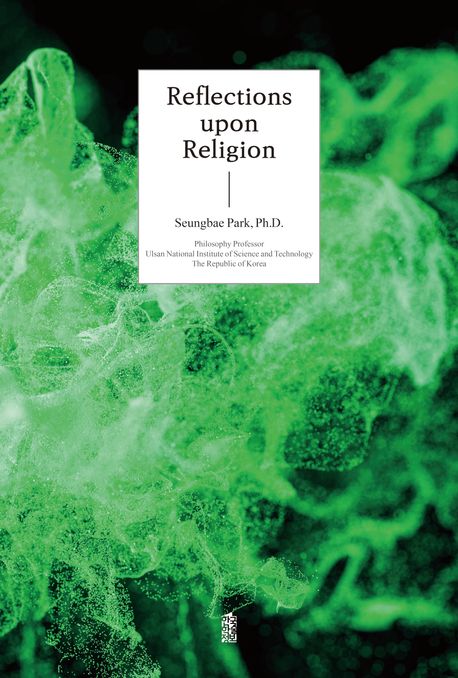
책소개Reflections upon Religion
-
This book is intended to be a useful philosophy of religion textbook for undergraduate students who major in science and engineering.
Unlike other philosophy of religion books, this book often combines traditional topics in philosophy of religion with scientific theories, such as evolutionary theory and the Big Bang theory. For this reason, science and engineering majors will be more excited to discuss traditional topics in philosophy of religion.
I do not expect that the readers of this book will be philosophy majors. As a consequence, philosophical jargons are kept to a minimum. In case I inevitably use one, I define it and offer examples to illustrate it. As a result of reading this book, students will increase their ability to think critically and creatively about God and religion. Demonstration is the best way to help them increase such an ability. In this spirit, I criticize distinguished thinkers’ views about God and religion, and defend alternatives to them.
I sometimes develop new topics about God and religion so that readers can be engaged in new debates about them. Such debates will cast new light on them. There are study questions at the end of each chapter. They are intended to stimulate readers to think for themselves about God and religion and to go beyond what I said in the book.
I thank the University of Maryland and UNIST for the chance to teach philosophy of religion courses. I could not write this book without my teaching experiences at those universities. Finally, I thank Professor John Park in Department of Philosophy at California State University - Sacramento for useful comments on an earlier draft of this book.
상세이미지 저자소개저자 : Seungbae Park.Ph.D.
Seungbae Park is a philosophy professor at Ulsan National Institute of Science and Technology in the Republic of Korea. He received his Ph.D. from the University of Arizona in 2001, specializing in philosophy of science under the guidance of Professor Richard Healey. He taught at the University of Arizona, the University of Maryland, and POSTECH, before coming to his current institution in 2009. He published about 80 papers in SCI-level international journals. Most of them are in philosophy of science, and some of them are in philosophy of religion and ethics. He also published a book titled Embracing Scientific Realism in Spring in 2022 and Induction, Science, and Morality in Springer in 2025. As an anonymous referee, he reviewed book manuscripts for Springer, Routledge, and Cambridge University Press, and reviewed article manuscripts for Journal of Philosophy, Philosophy of Science, The British Journal for the Philosophy of Science, Synthese, Social Epistemology, and Journal of Ethics.
목차Preface
1. Basic Terms
2. The Attributes of God
3. Design, Miracles, and Religious Experiences
4. The Ontological Argument
5. The Problem of Divine Elusiveness
6. The Origin of the Universe
7. The Problems of Divine Location and Age
8. The Problem of Divine Foreknowledge
9. The Problem of Evil
10. The Argument from Other Minds
11. Religious Beliefs and Truths
12. Ethics of Beliefs
13. Life after Death & Pascal’s Wager
14. The Problem of Divine Evaluation
15. The Problems of Heaven-Dwellers and Hell-Dwellers
16. Religious Language
17. The Conflicts between Science and Religion
18. Evolutionary Theory
19. The Origin of Religion
20. The Cognitive and Religious Hypotheses
21. Why Disbelieve in God?
22. Why Dogmatic? Why Proselytize?
23. Religious Self-Sacrifices
24. Religious Rituals
25. Religious Euphoria
26. The Impact of Religion on Morality
27. Religious Wars
28. Ego-Expanders in Religion
29. Religious Revolutions
30. Is Philosophy of Religion Useful to Religion? |
| 교환 및 환불 가능 |
상품에 문제가 있을 경우 |
1) 상품이 표시/광고된 내용과 다르거나 불량(부패, 변질, 파손, 표기오류, 이물혼입, 중량미달)이 발생한 경우 - 신선식품, 냉장식품, 냉동식품 : 수령일 다음날까지 신청 - 기타 상품 : 수령일로부터 30일 이내, 그 사실을 안 날 또는 알 수 있었던 날로부터 30일 이내 신청 2) 교환 및 환불신청 시 판매자는 상품의 상태를 확인할 수 있는 사진을 요청할 수 있으며 상품의 문제 정도에 따라 재배송, 일부환불, 전체환불이 진행됩니다. 반품에 따른 비용은 판매자 부담이며 환불은 반품도착일로부터 영업일 기준 3일 이내에 완료됩니다. |
|
단순변심 및 주문착오의 경우 |
1) 신선식품, 냉장식품, 냉동식품 재판매가 어려운 상품의 특성상, 교환 및 환불이 어렵습니다. 2) 화장품 피부 트러블 발생 시 전문의 진단서 및 소견서를 제출하시면 환불 가능합니다. 이 경우 제반비용은 소비자 부담이며, 배송비는 판매자가 부담합니다. 해당 화장품과 피부 트러블과의 상당한 인과관계가 인정되는 경우 또는 질환치료 목적의 경우에는 진단서 발급비용을 판매자가 부담합니다. 3) 기타 상품 수령일로부터 7일 이내 신청, 왕복배송비는 소비자 부담 4) 모니터 해상도의 차이로 색상이나 이미지가 다른 경우 단순변심에 의한 교환 및 환불이 제한될 수 있습니다. |
|
| 교환 및 환불 불가 |
1) 신청기한이 지난 경우 2) 소비자의 과실로 인해 상품 및 구성품의 전체 또는 일부가 없어지거나 훼손, 오염되었을 경우 3) 개봉하여 이미 섭취하였거나 사용(착용 및 설치 포함)해 상품 및 구성품의 가치가 손상된 경우 4) 시간이 경과하여 상품의 가치가 현저히 감소한 경우 5) 상세정보 또는 사용설명서에 안내된 주의사항 및 보관방법을 지키지 않은 경우 6) 사전예약 또는 주문제작으로 통해 소비자의 주문에 따라 개별적으로 생산되는 상품이 이미 제작진행된 경우 7) 복제가 가능한 상품 등의 포장을 훼손한 경우 8) 맛, 향, 색 등 단순 기호차이에 의한 경우 |
|




 카테고리
카테고리
