

| 상품 안내 및 환불, 교환, 배송문의 | |
| - 가게 전화번호 : | 1544-1900 |
| - 전화문의 시간 : |
오전 9시부터 오후 6시까지 (매주 월요일, 화요일, 수요일, 목요일, 금요일, 공휴일 제외) |
| - 가게 이메일 : | ink@kyobobook.co.kr |
| - 이용 택배회사 : | CJ대한통운 |
|
판매가게정보 |
|
| - 사업자명 : | (주)교보문고 |
| - 사업자등록번호 : | 102-81-11670 |
| - 통신판매업신고 : | 01-0653 |
|
- 현금영수증 : 발급가능 |
|
|
전화주문 및 결제문의 |
|
| - 꽃피는 아침마을 : | 1644-8422 |
|
가게와 직거래를 하시면 꽃송이 적립 및 각종 혜택에서 제외되고, 만일의 문제가 발생하는 경우에도 꽃마의 도움을 받으실 수 없습니다. 가게의 부당한 요구, 불공정 행위 등에 대해서도 꽃마로 직접 전화주세요. |
|

| 상세정보 | 구매후기 (0) | 상품Q&A (0) | 배송/교환/환불 안내 |
책소개이 책은 한국 학생들에게 영어로 국제 관계를 가르치기 위해 특별히 집필한 교재로서, 학생들이 이 학문의 중심인 이론, 원리, 역사적 사건, 행위자들을 배우도록 돕는 동시에 영어 이해력을 향상시키고 어휘를 확장시키는 것을 목표로 하고 있다. 특히 이 책은 주요 이론과 관련된 원리, 가정, 인과관계 논리와 이를 뒷받침하는 증거 등을 소개하였고, 분석 수준에 따라 분류된 이론적 설명들을 분야별로 분석하였으며, 또 다른 접근법으로 설명하기 위하여 역사적 사례를 활용하였다. 또한 추가적 내용으로 본문에 즉각적으로 영어쓰기 연습과 그에 대한 시험 지침, 읽기 쉽게 하기 위한 어휘 일치 연습, 그리고 책의 마지막에 있는 광범위한 영어-한국어 용어집을 수록함으로 검토 질문에 대한 내용을 보충하였다.
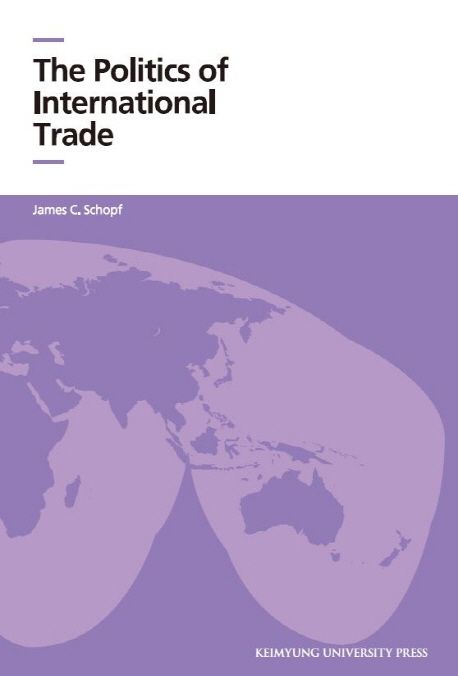
This textbook, specifically designed to teach International Relations in English to Korean students, fulfills two objectives: helping students to learn the theories, principles, historic events, and actors central to the discipline, while simultaneously aiming to improve English comprehension and expand vocabulary. The book introduces the principles, assumptions, causal logic and supporting evidence related to main theories, analyzes the field with theoretical explanations categorized according to level of analysis, and uses historical cases to test the explanatory power of these different approaches. The text is supplemented by review questions at the bottom of the page serving as prompts for English writing exercises and guides for exams, vocabulary-matching exercises to ease reading, and an extensive English-Korean glossary at the back of the book.
상세이미지 저자소개저자 : James C. Schopf
James C. Schopf is Professor of Political Science at Keimyung University i n Daegu, K orea. He received a PhD i n Political Science from the University of California, San Diego and a BA from Oberlin College. His research primarily concerns the effects of democratization on corruption, and he specializes in Korean politics. He was among the first to use the newly passed Korean Freedom of Information Act to gather previously classified material for his doctoral dissertation. His articles have appeared in numerous journals including Asian Survey, the Journal of East Asian Studies, the Asian Journal of Social Science, Pacific Review, Korea Observer, Telecommunications Policy and the Journal of Comparative Asian Development.
목차Preface 4
I Introduction and Theory 12
1 Introduction: The Focus of the Book 14
1.1 The Traditional Approaches to Trade Policy: Liberal, Realist and Marxist 17
1.2 Levels of Analysis & Trade Policy: Society, State and the International System 20
2 Introduction to Theory 25
2.1 The Normative or ‘Policy’ Approach 25
2.2 The Positive or Analytical Perspective 27
3 Liberal Theory 30
3.1 The basic tenets of the liberal perspective 31
3.2 The Assumptions of Liberalism 33
3.3 The Liberal View of International Trade 34
3.4 The Liberal View of Development 35
3.5 Absolute Advantage vs. Comparative Advantage 38
3.6 Critiques of the Liberal Perspective 40
4 Realism 43
4.1 Two Strains of Realism 45
4.2 Basic Tenets of the Realist Perspective 46
4.3 Motives of the Actor in Realism 47
4.4 The Definition of Power 48
4.5 The Elements of Power: Power Capabilities and Power Resources 48
4.6 The Nature of International Relations According to Realism 49
4.7 Realism and Development 51
4.8 Realism and Game Theory 53
4.9 The Prisoner’s Dilemma Game 54
5 Marxism / Structural Theory 59
5.1 The Basic Tenets of the Marxist Perspective 60
5.2 The Evolution of Marxism 61
5.3 Imperialism 63
5.4 Dependency Theorists 64
5.5 Import Substitution Industrialization (ISI) 65
5.6 Critiques of Dependency Theory 68
5.7 World Systems Theory 69
5.8 Gramscian Theory 70
II Trade Policy 72
6 The Tools of Trade Policy 74
6.1 Tariffs 76
6.2 Import Quotas 78
6.3 V.R.A.s 79
6.4 Standards 80
6.5 Technological Standards 81
6.6 Export Subsidies 82
6.7 Agricultural Subsidies 83
7 Justifications for Trade Protection 84
7.1 Infant Industries 84
7.2 Defense 85
7.3 Jobs 86
7.4 Income Distribution 87
7.5 Strategic Trade 88
7.6 Technology and Knowledge Spillovers 91
7.7 Optimum Tariff Theory 93
III Theoretical Perspectives on Trade 94
8 Three I.R. Theoretical Approaches to Trade 96
8.1 The Liberal View on Trade 98
8.2 Marxist Opposition to Free Trade 99
8.3 Realist Argue Against Free Trade 101
9 Societal Theories of Trade 102
9.1 Group trade policy preferences 103
9.2 Collective Action 104
9.3 The Factors of Production Theory 105
9.31 The Stolper - Samuelson Theory 108
9.32 The Magnification Effect 109
9.33 The China-U.S. Trade Policy Example 111
9.34 Critiques of Hecksher - Ohlin Trade Theory: Intra-Industry Trade 115
9.4 The Reasons for Intra-Industry Trade 117
9.41 Consumer Taste 117
9.42 Economies of Scale 117
9.43 M.N.C. Networks 120
9.44 The Product Lifecycle 125
9.5 The Sectors Model of Trade Policy 126
9.51 General Problems with the Factors Model of Trade Policy 126
9.52 Criticism of the Assumption of Factor Mobility 127
9.53 When Factors are not Mobile 128
9.54 The Collective Action Problem 133
9.55 Non-Excludability 133
9.56 The Cost of Organizing 134
9.6 The Factors Model vs. The Sectors Model 138
10 Institutional Theories of Trade Policy 139
10.1 Representation 142
10.2 Electoral System Rules 142
10.3 Constituency Size The Effect of Large Electoral Districts 144
10.31 The Effect of Large Electoral Districts 146
10.4 The U.S. Shift from Protectionism to Free Trade 147
10.41 RTAA 149
10.42 Fast Track Policy Making Rules 151
10.43 The Bureaucratic Safety Valve 152
11 An International Theory of Trade Policy: Hegemonic Stability 155
11.1 Hegemony and Free Trade 159
11.2 The Hegemon’s Free Trade Motives 160
11.3 Realist Hegemony Theory 161
11.4 Liberal Hegemony Theory 162
11.5 Measuring Hegemony 164
11.6 Hegemonic Stability Theory’s View of World History 166
11.61 Great Britain’s Hegemony 166
11.62 The Decline of British Hegemony 168
11.63 U.S. Hegemony 170
11.64 The Decline of U.S. Hegemony 171
11.7 Explaining the Hegemon’s Decline 173
11.71 Kennedy’s Imperial Overstretch 173
11.72 Olson’s Rent Seeking Groups 174
11.73 Hegemony and Currency Overvaluation 179
11.8 Is the U.S. in Decline? 181
11.81 A Decline in Threats after the Cold War 183
12 Testing Different Theories through the Corn Laws 185
12.1 The Corn Laws 186
IV The Modern Trade System and Rise of Regionalism 192
13 GATT 195
13.1 The GATT Principle of Liberalization 199
13.2 The GATT Principle of Non-Discrimination 202
13.3 The GATT Principle of Reciprocity 204
13.4 The GATT Principle of Safeguards 206
13.5 The Era of New Protectionism 208
14 The WTO 212
14.1 The Establishment of the WTO 212
14.2 Comparing WTO and GATT 215
15 The Rise of Regional Trade Agreements 219
15.1 Stages of Regional Integration 220
15.2 The First Wave of Regional Integration 222
15.3 The Second Wave of Regional Integration 224
15.4 Theoretical Explanations for the Rise of Regionalism 226
15.41 The Liberal View 226
15.42 The Realist View 229
15.43 The Marxist View 234
16 Conclusion 236
16.1 The End of Globalization? 240
References 243
Glossary 259 |
| 교환 및 환불 가능 |
상품에 문제가 있을 경우 |
1) 상품이 표시/광고된 내용과 다르거나 불량(부패, 변질, 파손, 표기오류, 이물혼입, 중량미달)이 발생한 경우 - 신선식품, 냉장식품, 냉동식품 : 수령일 다음날까지 신청 - 기타 상품 : 수령일로부터 30일 이내, 그 사실을 안 날 또는 알 수 있었던 날로부터 30일 이내 신청 2) 교환 및 환불신청 시 판매자는 상품의 상태를 확인할 수 있는 사진을 요청할 수 있으며 상품의 문제 정도에 따라 재배송, 일부환불, 전체환불이 진행됩니다. 반품에 따른 비용은 판매자 부담이며 환불은 반품도착일로부터 영업일 기준 3일 이내에 완료됩니다. |
|
단순변심 및 주문착오의 경우 |
1) 신선식품, 냉장식품, 냉동식품 재판매가 어려운 상품의 특성상, 교환 및 환불이 어렵습니다. 2) 화장품 피부 트러블 발생 시 전문의 진단서 및 소견서를 제출하시면 환불 가능합니다. 이 경우 제반비용은 소비자 부담이며, 배송비는 판매자가 부담합니다. 해당 화장품과 피부 트러블과의 상당한 인과관계가 인정되는 경우 또는 질환치료 목적의 경우에는 진단서 발급비용을 판매자가 부담합니다. 3) 기타 상품 수령일로부터 7일 이내 신청, 왕복배송비는 소비자 부담 4) 모니터 해상도의 차이로 색상이나 이미지가 다른 경우 단순변심에 의한 교환 및 환불이 제한될 수 있습니다. |
|
| 교환 및 환불 불가 |
1) 신청기한이 지난 경우 2) 소비자의 과실로 인해 상품 및 구성품의 전체 또는 일부가 없어지거나 훼손, 오염되었을 경우 3) 개봉하여 이미 섭취하였거나 사용(착용 및 설치 포함)해 상품 및 구성품의 가치가 손상된 경우 4) 시간이 경과하여 상품의 가치가 현저히 감소한 경우 5) 상세정보 또는 사용설명서에 안내된 주의사항 및 보관방법을 지키지 않은 경우 6) 사전예약 또는 주문제작으로 통해 소비자의 주문에 따라 개별적으로 생산되는 상품이 이미 제작진행된 경우 7) 복제가 가능한 상품 등의 포장을 훼손한 경우 8) 맛, 향, 색 등 단순 기호차이에 의한 경우 |
|



 카테고리
카테고리
