

| 상품 안내 및 환불, 교환, 배송문의 | |
| - 가게 전화번호 : | 1544-1900 |
| - 전화문의 시간 : |
오전 9시부터 오후 6시까지 (매주 월요일, 화요일, 수요일, 목요일, 금요일, 공휴일 제외) |
| - 가게 이메일 : | ink@kyobobook.co.kr |
| - 이용 택배회사 : | CJ대한통운 |
|
판매가게정보 |
|
| - 사업자명 : | (주)교보문고 |
| - 사업자등록번호 : | 102-81-11670 |
| - 통신판매업신고 : | 01-0653 |
|
- 현금영수증 : 발급가능 |
|
|
전화주문 및 결제문의 |
|
| - 꽃피는 아침마을 : | 1644-8422 |
|
가게와 직거래를 하시면 꽃송이 적립 및 각종 혜택에서 제외되고, 만일의 문제가 발생하는 경우에도 꽃마의 도움을 받으실 수 없습니다. 가게의 부당한 요구, 불공정 행위 등에 대해서도 꽃마로 직접 전화주세요. |
|

| 상세정보 | 구매후기 (0) | 상품Q&A (0) | 배송/교환/환불 안내 |
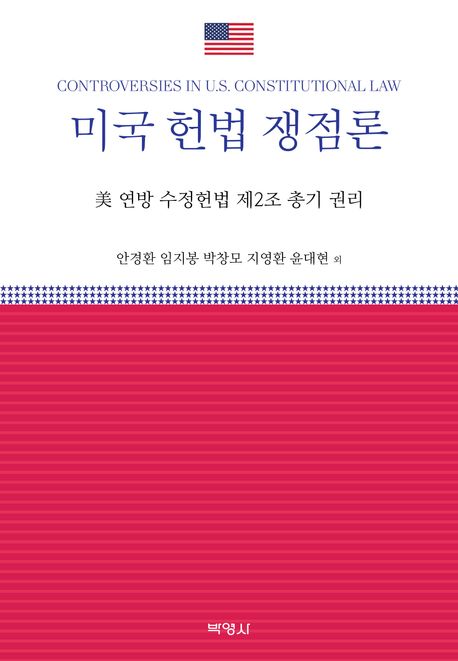
책소개2026년 01월 13일 출간 | ISBN : 1130398595 | 580쪽 | 규격外
상세이미지 저자소개저자 : 안경환
안경환
(安京煥 | Kyung-Whan Ahn)
서울대학교 법학전문대학원 명예교수, 법무부장관 후보자, 제4대 국가인권위원회 위원장, 서울대학교 법과대학 학장, 제8대 한국헌법학회 회장, 미국 산타클라라대학교 법학대학원 초대교수, 아시아태평양지역기구 국제조정위원회(ICC) 부의장, 미국 일리노이대학교 법학대학원 방문교수.
Professor Emeritus, Seoul National University School of Law; Former Nominee for Minister of Justice; Chairperson of the 4th National Human Rights Commission of Korea; Dean, College of Law, SNU; 8th President, Korean Constitutional Law Association; Founding Professor, Santa Clara University School of Law; Vice Chair, Asia-Pacific Forum of National Human Rights Institutions (ICC); Visiting Professor, University of Illinois College of Law (U.S.A.).
저자 : 임지봉
임지봉
(林智奉 | Ji-Bong Lim)
서강대학교 법학전문대학원 교수, 제27대 한국헌법학회 회장, 한국입법학회 회장(2018-2020), 대검찰청 검찰미래위원회 위원, 헌법재판소 헌법연구위원.
Professor, Sogang University School of Law; 27th President, Korean Constitutional Law Association; President, Korean Association of Legislative Studies (2018-2020); Member, Prosecution Reform Com-mittee, Supreme Prosecutors’ Office; Research Commissioner, Constitutional Court of Korea.
저자 : 박창모
박창모
(朴昌謨 | C. Mo Bahk)
미국 캘리포니아주립대학교 교수(학과장), 신시내티대학교 교수, 한미문학진흥재단 상임이사, 인랜드미주한인회 부회장.
Professor and Department Chair, California State University, San Bernardino (CA); Former Professor, University of Cincinnati (OH); Executive Director, Korea-America Literary Promotion Foundation; Vice President, Inland Korean American Society.
저자 : 지영환
지영환
(池榮? | Ji Young-Hwan, 號 Art Name 平靜 Pyeongjeong)
국가공무원, 성균관대학교 겸임교수, 중앙대학교 객원교수, 서울대학교 객원연구원, 중앙대학교 심리서비스대학원 겸임교수, 제주대학교 법학전문대학원 겸임교수, 전국지방변호사회장협의회 고문위원, 서울신문·통계청 자문위원, 제43·44대 한국시인협회 감사, 한국행정학회 학술정보위원회 이사(2014).
National Public Official and Adjunct Professor at Sungkyunkwan University, Chung-Ang University, and Jeju National University Law School; Visiting Research Fellow at Seoul National University; Advisor to the National Council of Local Bar Association Presidents, Seoul Newspaper, and the Korean Statistical Office; Auditor of the Korean Poets Association (43rd-44th terms); Board Member, Academic Information Committee, Korean Association for Public Administration (2014).
저자 : 윤대현
윤대현
(尹大鉉 | Dae-Hyun Yoon)
성균관대학교 경영학 학사·정치학 석사, FM 그룹 회장, 한국헌법학연구소 고문.
B.A. in Business Administration and M.A. in Political Science, Sungkyunkwan University; Chairman, FM Group; Advisor, Korean Constitutional Law Institute.
저자 : 손영호
손영호
(孫永浩 | Young-Ho Son)
베트남 호치민 국립대학교 인문사회대학 교수, 청주대학교 교수 역임, 청주대학교 어학교육원장, 입학처장, 국제교류처장 역임.
Professor, University of Social Sciences and Humanities, Vietnam National University (Ho Chi Minh City); Former Professor, Cheongju University; Former Dean, Language Education Center; Former Director of Admissions and International Affairs, Cheongju University.
저자 : 장인호
장인호
(張仁豪 | In-Ho Jang)
경찰대학 법학과 교수, 미국헌법학회 감사, 전 경찰대학 치안대학원 공공안전학과장, 경찰대학 산단부단장.
Professor, Department of Law, Korean National Police University; Auditor, American Constitutional Law Association; Former Chair, Department of Public Safety Studies, Graduate School of Policing; Former Deputy Director, Police University Industry-Academic Cooperation Foundation.
저자 : 조현민
조현민
(趙鉉珉 | Hyun-Min Cho)
서울특별시경찰청 특공대 전술교관, 범죄학박사.
Tactical Instructor, Special Operations Unit, Seoul Metropolitan Police Agency; Ph.D. in Criminology.
저자 : 조기환
조기환
(趙起煥 | Ki-Hwan Cho)
성균관대학교 경영학석사, ㈜ 에머티바이오 대표이사.
M.B.A., Sungkyunkwan University; Chief Executive Officer, EmertiBio Co., Ltd.
목차1. 미국의 총기문화에 대한 일 고찰
[손영호]
Ⅰ. 머리말 1
Ⅱ. 총기문화의 역사ㆍ문화적 기원 2
Ⅲ. 문학과 영화 속에 나타난 총기문화 12
Ⅳ. 수정헌법 제2조의 내용과 의미 17
Ⅴ. 맺음말 22
2. 미국 연방헌법 수정 제2조(무기소장권)의 의미
[안경환]
Ⅰ. 머리말 25
Ⅱ. 문제의 부상 27
Ⅲ. 논쟁의 핵심: 개인적 권리인가 아니면 주의 집단적 권리인가? 29
Ⅳ. 수정 제2조의 역사적 배경 31
1. 영국 커먼로(Common Law)의 전통 31
2. 공화주의 정치이론 33
3. 제헌회의 34
4. 비준과정 36
Ⅴ. 연방의회의 태도 37
Ⅵ. 법원의 태도 39
Ⅶ. 맺음말 44
3. 미국 연방헌법 수정조항 제2조
[손영호]
Ⅰ. 머리말 49
Ⅱ. 무기소지권에 대한 논쟁과 대법원 판례 53
Ⅲ. 수정헌법 제2조의 핵심 이념: 자기방어의 기본권 60
Ⅳ. 맺음말 71
4. 미국 수정헌법 제2조의 무기소지권과 총기규제
[임지봉]
Ⅰ. 머리말: 문제의 제기 77
Ⅱ. 미국 수정헌법 제2조의 역사적 규정 배경과 연혁 78
1. 무기소지권의 영국적 기원 78
2. 미합중국의 건국과 수정헌법 제2조의 채택 79
Ⅲ. 미국 수정헌법 제2조에 대한 두 가지 해석론들 82
Ⅳ. 수정헌법 제2조에 대한 미국 연방대법원의 주요 판결들 83
1. 2008년 Heller 판결 이전의 수정헌법 제2조에 대한 미국 연방대법원의 입장 83
2. 2008년의 District of Columbia v. Heller 판결 83
3. 2010년의 McDonald v. City of Chicago 판결 90
Ⅴ. 무기소지권과 미국에서의 총기규제법의 합헌성 심사 법리 93
1. 무기소지권은 민병대의 권리가 아니라 개인의 권리 94
2. 무기소지권의 적용 범위 95
3. 원의주의적 접근법과 미해결의 쟁점들 96
4. 편입조항(Incorporation Clause)의 해석 96
Ⅵ. 맺음말 98
5. 헌법상 민간부문총기관리ㆍ감독의 의미와 미국의 민간부문총기관리ㆍ감독현황 및 시사점
[장인호]
Ⅰ. 문제제기 101
Ⅱ. 헌법상 민간부문총기관리ㆍ감독의 의미 103
1. 민간부문총기관리ㆍ감독의 의의 103
2. 민간부문총기관리ㆍ감독의 헌법적 의미 105
3. 민간부문총기관리ㆍ감독에 있어 국가의 헌법상 의무 106
Ⅲ. 미국의 민간부문총기관리ㆍ감독제도의 운영현황 및 시사점 107
1. 미국의 민간부문총기관리ㆍ감독 실태 107
2. 총기소지에 관한 미국연방헌법과 관련법제도 110
3. 미국의 총기규제강화법안의 논의 115
4. 우리나라에의 시사점 116
Ⅳ. 우리나라 「총포ㆍ도검ㆍ화약류등단속법」상 총기관리ㆍ감독제도의 주요내용 분석과 문제점 검토 118
1. 우리나라 총기관리ㆍ감독의 실태 118
2. 「총포ㆍ도검ㆍ화약류등단속법」상 총기관리ㆍ감독관련주요내용 분석 119
3. 「총포ㆍ도검ㆍ화약류등단속법」상 총기관리ㆍ감독제도 문제점 검토 120
4. 총포사고 급증하고 있는 우리나라에서 총기사고예방대책 필요성 증대 121
Ⅴ. 우리나라 「총포ㆍ도검ㆍ화약류등단속법」상 총기관리ㆍ감독제도상의 합리적인 개선방안의 방향과 내용 122
1. 총기관리ㆍ감독의 방향 122
2. 총기관리ㆍ감독의 개선 시 고려해야할 사항 123
3. 안전한 총기관리ㆍ감독환경조성 및 공공안전ㆍ국민기본권 보호강화 128
Ⅵ. 맺음말 129
6. 총기난사요인이 대량살인 여부에 미치는 영향분석
[조현민]
Ⅰ. 머리말 133
Ⅱ. 문헌 고찰 135
1. 총격 후 자살과 대량살인 137
2. 피해자 관계와 대량살인 138
3. 총기화력과 대량살인 139
4. 총기법률과 대량살인 139
Ⅲ. 자료수집과 분석방법 141
1. 연구모형 141
2. 분석자료 및 방법 142
3. 변수의 측정 143
Ⅳ. 분석 결과 144
1. 기술통계 144
2. 로지스틱 회귀분석 결과 145
Ⅴ. 결론 및 함의 147
7. 미국 연방 수정헌법 제2조 총기권리 위헌적 함의
[지영환ㆍ윤대현ㆍ조기환]
Ⅰ. 미합중국 헌법(美合衆國 憲法 Constitution of the United States) 155
Ⅱ. 미국 대통령(The President of the United States) 對 총기 165
1. 미국 대통령 對 총기 168
2. 미국 총기사건 일지 168
Ⅲ. 미국 연방 헌법 수정 제2조 의미 196
Ⅳ. 미국 연방헌법 수정조항 제2조 역사적 배경 208
Ⅴ. 미국 연방헌법 수정조항 제2조 연방대법원-법원 판례 238
Ⅵ. 美 연방 수정헌법 제2조 총기 규제에 관한 법원의 균형 240
Ⅶ. 美 연방 법원 판례 243
Ⅷ. 美 연방 수정헌법 제2조 총기권리 위헌적 함의 244
1. 미국 헌법상 총기 소지의 권리와 그 규제의 딜레마 245
2. 미국 총으로 세워진 나라 250
3. 총기사건들과 미연방헌법 수정 제2조 253
8. The Media and the Second Amendment to the Constitution of the United States
[박창모]
Ⅰ. The U.S. Constitution and the Second Amendment 258
Ⅱ. The Media and the Second Amendment 261
Ⅲ. Media Coverage of Court Rulings on the Second Amendment 262
Ⅳ. Mechanisms of Media Influence on Second Amendment Issues 267
Ⅴ. Digital/Social Media and the Second Amendment 282
Ⅵ. Tool Media, IoT Technologies, and the Second Amendment 286
Ⅶ. Conclusion and Implications 289
9. 國家의 法 對 人의 法哲學
[지영환]
Ⅰ. 서론 Introduction 301
1. 연구의 배경 및 문제의식 301
Ⅱ. 國家의 法哲學 - 명령과 제도의 이성 The Jurisprudence of the State - Command and Institutional Reason 307
Ⅲ. 人의 法哲學 - 양심과 仁의 이성 The Jurisprudence of Man - Reason of Conscience and Benevolence 321
Ⅳ. 위임된 2차적 이성의 구조 The Structure of Delegated Secondary Reason 328
Ⅴ. 〈兩海之倫 -호레이쇼 넬슨과 이순신의 國家法哲學〉 The Two Seas of Duty -A Comparative Jurisprudence of Horatio Nelson and Yi Sun-sin 336
Ⅵ. 仁 對 人의 精神과 法哲學 The Spirit of Ren and Man-A Philosophy of Law and Human Virtue 340
Ⅶ. 結論 1 - 國家를 넘어, 神 그리고 百姓(國民)에게 Conclusion - Beyond the State, Before God and Before the People 350
Ⅷ. 結論 2 - Conclusion - Beyond the State, Before God and Before the People 354
부록 - 對談 : ChatGPT 對 평정(平靜) 지영환(池榮?)
Ⅰ. 美 연방 수정헌법 제2조 총기권리 ChatGPT 의견? 441
1. 일반인의 총기 소지 허용 국가 현황 441
2. 미국 일반인들의 총기 소지와 규제 핵심 447
Ⅱ. ChatGPT 先生 미합중국 연방헌법(美合衆國 聯邦憲法) 수정 제2조 존속해야 할까? 폐지해야 할까? 453
Ⅲ. 미합중국 연방헌법(美合衆國 聯邦憲法) 수정 제2조 총기권리 유지로 인해 총기난사가 지속되는데, 미국과 세계 각국에 미치는 심리적·실질적 악영향이 존재할까? 457
1. 미합중국 수정헌법 제2조의 심리적 및 구조적 영향: 총기폭력과 정책 대응에 대한 세계적 분석 457
2. 미합중국 연방헌법 제2조 총기 권리 판례 분석: Bruen 판결 이후 하위법원 적용과 주별 규제 비교 462
3. 미국 연방헌법 수정 제2조와 총기 소지 권리: 규제와 개정 논쟁의 정치적·사회적 고찰 468
주요 찾아보기 478
책속으로Chapter 1 (제1편) The chapter presents a meticulously detailed exploration of the historical, cultural, and constitutional underpinnings of the United States’ enduring gun culture, situating its origins in the nation’s earliest colonial experience and tracing its evolution through the Revolutionary War, the westward expansion, popular culture, and modern constitutional law. The work’s central contention is that American gun culture is not a recent or incidental phenomenon but rather a deeply rooted feature of the nation’s identity-formed through lived necessity on the frontier, reinforced by the mythology of literature and film, and given legal sanction by the Second Amendment. This intertwining of practical survival needs, symbolic values, and legal protections helps explain the remarkable resilience of American gun ownership traditions in the face of recurring gun-related tragedies. The study begins with a stark observation about contemporary America: gun violence, ranging from urban shootouts to mass school shootings, is a persistent feature of daily life. Incidents occur in high schools, universities, and even elementary schools, and armed confrontations between criminals and police are common. The United States records more than 200,000 violent crimes each year, with firearms responsible for approximately 70% of the resulting deaths-about 25,000 annually. Yet, despite the magnitude of the problem, the acquisition of firearms remains remarkably accessible. Federal law allows almost any adult over the age of twenty-one to purchase a gun after a minimal background check, and there is no nationwide requirement for individual gun registration. This makes it impossible to know precisely how many guns are in circulation or who owns them. The FBI estimates that private citizens collectively possess more than 250 million firearms, with numbers increasing by millions annually-enough to arm the entire population. It is for this reason that some observers describe the United States as a “Gunocracy,” a nation dominated by its firearms. The question the chapter poses is straightforward yet profound: why, in a country that once successfully enacted nationwide Prohibition on alcohol, is it so resistant to effective regulation of firearms, despite the high social costs? The answer, the author argues, lies in the unique historical and cultural development of the United States, where firearms have long been associated not only with physical survival but also with personal liberty, self-reliance, and national identity. The historical analysis begins with the term “gun culture” itself, popularized by historian Richard Hofstadter in 1970, who described firearms as embedded in the American experience from colonial settlement through the western frontier era. Hofstadter’s framing made “gun culture” a central concept in public debate whenever gun-related controversies arose. Yet, this consensus view was challenged by historian Michael Bellesiles, whose 2000 book Arming America argued that widespread gun ownership did not exist in the colonial or early republican periods. Drawing on probate records from 1765 to 1790 in New England and Pennsylvania, Bellesiles claimed that only about 10% of people owned guns at that time, and that many were broken or unusable. He maintained that the romanticized tradition of an armed citizenry was a constructed myth, promoted later to justify political agendas favoring legalized gun ownership. While Bellesiles’s argument attracted attention for its originality, it was also criticized for its narrow evidentiary focus and for neglecting broader considerations such as the symbolic and political role of arms. Critics noted that if gun ownership were measured solely by numbers and production, other nations-like England-would have been the true originators of “gun culture,” which they were not. Moreover, Bellesiles paid insufficient attention to the constitutional protection of arms in the Second Amendment and the attitudes of the Founding Fathers toward an armed populace. Many historians have argued instead that American gun culture emerged organically from the lived realities of colonial settlement, the fight for independence, and the westward movement. It drew on English hunting traditions, the Revolutionary militia ethos, and the practical demands of frontier life. From the colonial era, firearms were indispensable tools for settlers, who relied on them for protection against both wild animals and potential conflict with Native Americans, as well as for supplementing their diet through hunting. Given the great distance from England and the impossibility of providing full military or police protection, the Crown permitted colonists to keep arms for self-defense. Notable historians like Daniel Boorstin and Wesley Craven emphasized that nearly every able-bodied male in early settlements possessed a gun, and that knowledge of its use was considered an essential component of manhood. William C. Davis vividly described frontier fathers teaching their sons to shoot by the ages of nine or ten, combining hunting trips with instruction in self-defense, and celebrating the family’s security and prosperity through shared use of the rifle. Travel narratives from the seventeenth through nineteenth centuries confirm the centrality of firearms in American daily life. Harold L. Peterson noted that between 1620 and 1690, there was no period in which firearms were more essential. While colonial America lacked the capacity to manufacture guns in large numbers, imports from Europe ensured access to high-quality arms. The result, by the eighteenth century, was that American colonists were arguably the best-armed civilian population in the world. English common law guaranteed the right to bear arms, and on the frontier this right was closely tied to ideals of personal liberty and self-determination. The Revolutionary War further strengthened this association. In response to British attempts to confiscate colonial arms-such as the 1774 ban on exporting military supplies to the colonies and the seizure of weapons from Boston residents-patriot leaders urged citizens to arm themselves. Volunteer militias, often composed of local farmers and tradesmen, organized rapidly into “minute men,” ready to fight at a moment’s notice. These citizen forces, under leaders like George Washington, played decisive roles in battles such as Saratoga and Yorktown, contributing significantly to the war’s outcome. The war thus enshrined the belief that firearms were essential not only for personal defense but for the preservation of political liberty. In this vision, the gun was a guarantor of independence, a check against tyranny, and a symbol of citizenship. The westward expansion in the nineteenth century reinforced and extended these values. The frontier was a lawless and often dangerous space, where settlers faced threats from hostile groups, outlaws, and predatory wildlife. Memoirs and travelogues from regions like Alabama, Tennessee, Missouri, and Pennsylvania depict communities where every household possessed one or more firearms, and where hunting and marksmanship were daily practices. In Alabama, Philip Gosse recorded competitive shooting games that demanded extraordinary skill, such as hitting the head of a nail from a distance sufficient to drive it flush into a plank. Alexis de Tocqueville, visiting Tennessee, observed that many farmers preferred hunting to agricultural labor, treating it as both sustenance and leisure. In Missouri’s Ozarks, Henry Rowe Schoolcraft found boys as young as fourteen proficient in the use of rifles, with hunting viewed as both economically valuable and socially honorable. Firearms were also used in communal law enforcement-citizens armed themselves to pursue criminals or settle disputes, further blurring the lines between private and public uses of force. Such customs were woven into social rituals as well. “Christmas shooting,” in which groups w |
| 교환 및 환불 가능 |
상품에 문제가 있을 경우 |
1) 상품이 표시/광고된 내용과 다르거나 불량(부패, 변질, 파손, 표기오류, 이물혼입, 중량미달)이 발생한 경우 - 신선식품, 냉장식품, 냉동식품 : 수령일 다음날까지 신청 - 기타 상품 : 수령일로부터 30일 이내, 그 사실을 안 날 또는 알 수 있었던 날로부터 30일 이내 신청 2) 교환 및 환불신청 시 판매자는 상품의 상태를 확인할 수 있는 사진을 요청할 수 있으며 상품의 문제 정도에 따라 재배송, 일부환불, 전체환불이 진행됩니다. 반품에 따른 비용은 판매자 부담이며 환불은 반품도착일로부터 영업일 기준 3일 이내에 완료됩니다. |
|
단순변심 및 주문착오의 경우 |
1) 신선식품, 냉장식품, 냉동식품 재판매가 어려운 상품의 특성상, 교환 및 환불이 어렵습니다. 2) 화장품 피부 트러블 발생 시 전문의 진단서 및 소견서를 제출하시면 환불 가능합니다. 이 경우 제반비용은 소비자 부담이며, 배송비는 판매자가 부담합니다. 해당 화장품과 피부 트러블과의 상당한 인과관계가 인정되는 경우 또는 질환치료 목적의 경우에는 진단서 발급비용을 판매자가 부담합니다. 3) 기타 상품 수령일로부터 7일 이내 신청, 왕복배송비는 소비자 부담 4) 모니터 해상도의 차이로 색상이나 이미지가 다른 경우 단순변심에 의한 교환 및 환불이 제한될 수 있습니다. |
|
| 교환 및 환불 불가 |
1) 신청기한이 지난 경우 2) 소비자의 과실로 인해 상품 및 구성품의 전체 또는 일부가 없어지거나 훼손, 오염되었을 경우 3) 개봉하여 이미 섭취하였거나 사용(착용 및 설치 포함)해 상품 및 구성품의 가치가 손상된 경우 4) 시간이 경과하여 상품의 가치가 현저히 감소한 경우 5) 상세정보 또는 사용설명서에 안내된 주의사항 및 보관방법을 지키지 않은 경우 6) 사전예약 또는 주문제작으로 통해 소비자의 주문에 따라 개별적으로 생산되는 상품이 이미 제작진행된 경우 7) 복제가 가능한 상품 등의 포장을 훼손한 경우 8) 맛, 향, 색 등 단순 기호차이에 의한 경우 |
|



 카테고리
카테고리
