

| 상품 안내 및 환불, 교환, 배송문의 | |
| - 가게 전화번호 : | 1544-1900 |
| - 전화문의 시간 : |
오전 9시부터 오후 6시까지 (매주 월요일, 화요일, 수요일, 목요일, 금요일, 공휴일 제외) |
| - 가게 이메일 : | ink@kyobobook.co.kr |
| - 이용 택배회사 : | CJ대한통운 |
|
판매가게정보 |
|
| - 사업자명 : | (주)교보문고 |
| - 사업자등록번호 : | 102-81-11670 |
| - 통신판매업신고 : | 01-0653 |
|
- 현금영수증 : 발급가능 |
|
|
전화주문 및 결제문의 |
|
| - 꽃피는 아침마을 : | 1644-8422 |
|
가게와 직거래를 하시면 꽃송이 적립 및 각종 혜택에서 제외되고, 만일의 문제가 발생하는 경우에도 꽃마의 도움을 받으실 수 없습니다. 가게의 부당한 요구, 불공정 행위 등에 대해서도 꽃마로 직접 전화주세요. |
|

| 상세정보 | 구매후기 (0) | 상품Q&A (0) | 배송/교환/환불 안내 |
책소개prologue: 바다가 그 경계를 기억하는 곳
『國家 領土 主權論』은 21세기 주권·영토 질서가 근본적으로 재구성되는 변곡점에서, 법·정치·철학·역사·지리·국제관계의 학제적 관점으로 국가 영토 주권을 재해석한 연구 성과를 한 권으로 묶었다. 동아시아의 역사적 질서는 근본적으로 위계와 조공 체제라는 원리 위에서 작동해 왔으며, 오늘의 국제 규범과 기억 정치가 이 지역의 영토 인식과 정책을 여전히 매개한다는 점을 응시한다.
특히 글로벌 거버넌스와 인권 네트워크의 확장 속에서 주권은 더 이상 폐쇄적 영토 소유가 아닌 규범·제도·서사와 교차하는 가변적 실천으로 변모하고 있음을 전제한다. 본서는 이러한 변화의 지형에서 울릉도·독도 문제를 비롯한 한국의 영토 주권 담론을 세계사적 맥락으로 재배치하며, 실정법·국제정치·기억·해양안보를 통합적으로 검토한다.
‘제1편 국경관리에서 국가 주권’에서는 국경관리의 법·정치 및 거버넌멘털리티(governmentality)를 통해 주권과 인권의 접점이 어떻게 재구성되는지 분석한다. 인권 규범과 초국가 네트워크의 압력은 주권의 의미를 점진적으로 재개념화하며, 이는 동아시아의 역사적 위계 질서 경험과도 상호작용한다. 최근 ‘영토 무결성’ 합의의 약화 속에 국경관리의 실천은 다층적으로 분화·경합하며, 규범과 권력이 중첩되는 양상을 보인다는 점을 강조한다.
‘제2편 시법제의 현대적 함의’에서는 시대 변화에 따른 법 규범의 적응성(법의 시간성)을 조망하며, 국제규범 가입·준수의 비용과 집행 메커니즘이 국가 선택에 미치는 영향을 통해 국내 주권 배열과의 결합·분리를 검토한다. 주권과 국제법의 결합 방식은 규범 집행 강도에 비례해 ‘긴 결합’ 혹은 ‘느슨한 결합’으로 달라질 수 있다는 점을 보여준다.
제3편 ‘울릉도에서 독도가 보이는 조건 〈풍일청명〉의 해석’, 제4편 ‘정인조의 「울릉도기행」과 울릉도·독도 국가지질공원의 역사적 형성과 보존 논리’에서는 지질·생태·민속 기록이 영토 정체성의 기억 기반을 제공함을 고찰한다. 이는 식민 도시화가 남긴 물질·상상 지리의 유산을 비판적으로 재독해하는 작업과도 맞닿는다. 해양과 연안의 보존·관리 체계는 오늘날 다기능적 해양 구역화와 결합해 영토 주권의 작동 공간을 재배열한다는 점을 보여준다.
제5편 ‘고유영토론과 상극하는 미국의 영토 형성과 독도에 관한 인식’에서는 미국의 영토 팽창과 정착·토지 정책, 인구·영토 관리의 전략을 통해 국경을 확장한 사례를 검토하며, 전후 동북아의 영토 인식과 정책 형성에 주는 구조적 함의를 분석한다. 대국의 해양 전략과 해군력 기획은 지역 영토 쟁점의 인식·우선순위에 영향을 주며, 이는 동아시아에서의 해양 경쟁 및 협력 구도와도 연동된다.
‘독도: 국제문서와 전후 일본의 정책’에서는 샌프란시스코 강화조약, SCAPIN 문서, 1965년 교환공문 등 국제문서의 법적 함의를 체계적으로 재검토하며, 전후 일본의 독도 정책 변천을 ‘문서-정책-담론’ 사슬로 분석한다. 유엔 체제의 다자 장치와 미국의 정책 환경은 한국의 외교적 선택 공간에 지속적 제약과 기회를 동시에 제공해 왔다.
집합기억의 프레이밍·화자 권위·경계 설정이 한일 관계의 화해 실패를 설명하는 중요한 내부 변수라는 점을 상기시키며, 영토 담론 역시 국내 정치의 경쟁적 동원 속에서 의미가 변형된다.
제6편 ‘1965년 한일 간 교환공문으로 본 독도 영유권’, 제7편 ‘샌프란시스코 조약으로 흡수된 SCAPIN 문서와 독도의 영유권’, 제8편 ‘전후 일본의 독도 정책’, 제9편 ‘세계 4대 해전의 기원과 명명’, 제10편 ‘국가와 절대윤리 앞의 양혼’ 등으로 체계를 이룬다.
현대 해양안보는 접속적·중첩적 구역화로 재편되며, 전통적 ‘국가안보의 해역’은 다기능 벨트 중 일부로 축소되고 비전통 안보의 위계는 상승한다. 중국의 해양 민족주의와 항모 중심 원해전력 지향은 지역 해양 균형과 미·중 협력에 중장기적 도전을 제기하며, 이는 동북아 영토·해양 분쟁의 전략 환경을 규정한다.
이 장에서는 영토 분쟁의 전략이 전면전보다 기정사실화(fait accompli)로 이동했고, 인구가 적고 수비가 약한 전략 요충의 점유 시도가 늘어나는 등 21세기 안보 경관의 핵심 특징이 되었음을 강조한다.
영토는 측량 가능한 경계이면서, 제도·기억·해양 질서가 맞물려 작동하는 복합 시스템이다. 본서는 국경관리와 시법제, 울릉도·독도의 보존과 문서 해석, 그리고 세계 해전사의 장기 동학을 한 축으로 엮어 한국의 영토 주권 담론을 세계적 공론장으로 확장한다. 변화하는 국제질서 속에서 우리는 법과 기억, 기술과 해양의 언어로 주권을 다시 써 내려가야 한다.
2026년 1월 12일
세종대학교 독도종합연구소장
호사카 유지
prologue: Where the Sea Remembers Its Boundaries
The Theory of National Territorial Sovereignty brings together, in a single volume, a series of research contributions that reinterpret state territorial sovereignty at a historical juncture in which the sovereignty-territory order of the twenty-first century is being fundamentally restructured. It examines how the historical order of East Asia-long shaped by principles of hierarchy and tributary relations-continues to influence contemporary territorial perceptions and policy through today’s international norms and politics of memory.
In particular, the volume begins from the premise that sovereignty, in the expanding landscape of global governance and human-rights networks, is no longer a closed form of territorial possession but is increasingly a mutable practice shaped by the intersections of norms, institutions, and narratives. Within this shifting terrain, the volume relocates Korea’s territorial-sovereignty discourse-including the issues of Ulleungdo and Dokdo-within a broader world-historical context, while examining positive law, international politics, memory, and maritime security in an integrated manner.
Part I, “State Sovereignty in Border Management,” analyzes how the interface between sovereignty and human rights is being reconfigured through the law, politics, and governmentality of border management. The pressures exerted by human-rights norms and transnational networks gradually re-conceptualize the meaning of sovereignty, interacting in turn with East Asia’s historical experience of hierarchical order. Amid the weakening consensus on “territorial integrity,” the practical operations of border governance have become multilayered, differentiated, and contested, revealing patterns in which norms and power increasingly overlap.
Part II, “The Contemporary Implications of Intertemporal Law,” surveys the adaptability of legal norms over time-the temporality of law-and evaluates how the costs and enforcement mechanisms involved in the accession to and compliance with international norms influence state choices, thereby illuminating the modes of coupling and decoupling between domestic sovereignty arrangements and international law. It shows that the configuration of sovereignty and international law may shift toward either a “tight coupling” or a “loose coupling,” depending on the strength of normative enforcement.
Part III, “Interpreting Pungilcheongmyeong: The Conditions Under Which Dokdo Is Visible from Ulleungdo,” and
Part IV, “Jeong In-jo’s Ulleungdo Travelogue and the Historical Formation and Preservation Logic of the Ulleungdo-Dokdo National Geoparks,” investigate how geological, ecological, and folkloric records provide a memory-based foundation for territorial identity. These inquiries intersect with critical re-readings of the material and imagined geographies produced by colonial urbanization. They further show that modern systems of coastal and marine conservation-when combined with today’s multifunctional maritime zoning-reconfigure the operational space of territorial sovereignty.
Part V, “The Formation of U.S. Territory and Its Perception of Dokdo: A Challenge to Korea’s Inherent-Territory Theory,” examines how the United States expanded its borders through territorial enlargement, settlement, land policy, and population-territory management strategies, providing structural implications for the formation of postwar Northeast Asian territorial perceptions and policies. Great-power maritime strategy and naval planning influence the recognition and prioritization of regional territorial issues, linking them to broader patterns of maritime competition and cooperation in East Asia.
The chapter “Dokdo: International Documents and Postwar Japan’s Policy” systematically re-evaluates the legal implications of the San Francisco Peace Treaty, SCAPIN documents, and the 1965 Exchange of Notes, analyzing the evolution of Japan’s postwar Dokdo policy through the chain of “documents-policy-discourse.” It demonstrates how the multilateral mechanisms of the UN system and the broader policy environment of the United States have continually shaped both the constraints and opportunities available to Korean diplomatic strategy.
The volume underscores that the framing of collective memory, the authority of narrators, and the setting of boundaries constitute significant domestic variables explaining the persistent failure of Korea-Japan reconciliation, and that territorial discourse itself is reshaped through competitive mobilization in domestic politics.
Part Ⅵ, “Dokdo Sovereignty through the Lens of the 1965 Korea-Japan Exchange of Notes,”
Part Ⅶ, “SCAPIN Documents Subsumed into the San Francisco Peace Treaty and Their Implications for Dokdo Sovereignty,”
Part Ⅷ, “Postwar Japan’s Dokdo Policy,”
Part Ⅸ, “The Origins and Naming of the Four Great Naval Battles of the World,” and
Part Ⅹ, “Conscience before the State and Absolute Ethics,” complete the structure of the volume.
Modern maritime security is being reorganized through connective and overlapping zoning. Traditional “territorial waters of national security” have become only one segment of multifunctional maritime belts, while the hierarchy of non-traditional security has risen. China’s maritime nationalism and its carrier-centered blue-water naval ambitions pose long-term challenges to regional maritime balance and U.S.-China cooperation, shaping the strategic environment of territorial and maritime disputes in Northeast Asia.
This chapter highlights that the strategy of territorial disputes has shifted from full-scale conflict to fait accompli operations, with increasing attempts to seize sparsely populated and weakly defended strategic points-one of the defining features of the twenty-first-century security landscape.
Territory is at once a measurable boundary and a complex system in which institutions, memory, and maritime order interlock. This volume weaves together border management, intertemporal law, the preservation and interpretation of Ulleungdo and Dokdo, and the long-term dynamics of world naval history to expand Korea’s territorial-sovereignty discourse into the global public sphere. In a rapidly changing international order, we must rewrite sovereignty through the languages of law, memory, technology, and the sea.
January 12, 2026
Hosaka Yuji
Director, Dokdo Research Institute, Sejong University
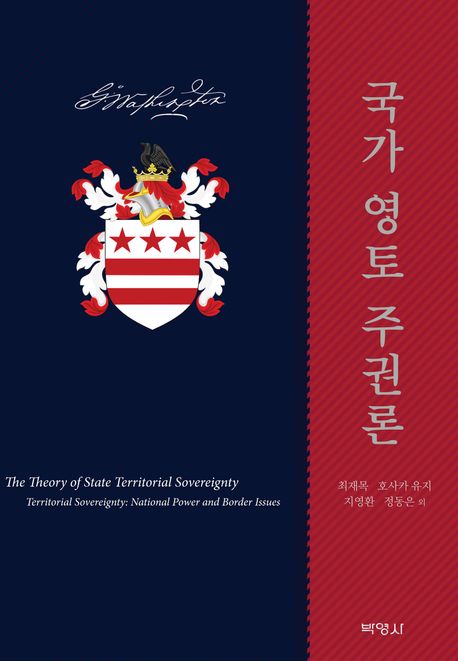
아메리카 합중국(美國) 제1대 대통령
조지 워싱턴 초상화(1789-1797)
1796년 화가 길버트 스튜어트는 미합중국 제1대 대통령 조지 워싱턴의 초상을 그렸다 그는 새로 태어난 공화국의 얼굴을 세우려 한 화가였으나 완성된 초상화를 남기지 않았다 얼굴은 그려졌으나 배경은 칠해지지 않았다. 붓은 옷깃에서 멈추었고 주권의 윤리는 캔버스의 여백 속에 남았다. 그 미완의 초상이야말로 한 국가의 초상이며 아직 완성되지 않은 인간의 윤리였다. 이 초상은 법과 윤리의 기원에 대한 은유로 남았다. 스튜어트는 이 작품을 원형으로 삼아 여러 복제 초상을 제작했으나 이 원본만은 완성하지 않았다. 미술사적 이유는 단순했으나 철학적 이유는 깊다. 그는 무심히 남긴 미완 속에 국가의 양심이 남았고 그 배경의 공백이 공화국의 시간으로 변하였다. 얼굴이 완성된 국가는 법의 형태를 가졌으나 배경이 비어 있는 국가는 윤리의 책임을 지녔다. 조지 워싱턴은 이 초상을 직접 보았다고 전한다. 완성되지 않은 그림이었으나 그는 그 미완의 얼굴을 마음에 들어 했다. 그에게 그것은 자신의 초상이 아니라 새로 태어난 나라의 초상이었다. 완성되지 않았기에 더 오래 살아남을 초상이었다. 미완의 그림 속에서 그는 완성의 의무를 느꼈고 그 의무가 바로 국가의 윤리였다. 국가의 주권은 완성된 권력이 아니라 완성되어야 할 책임이다. 법은 윤리의 선행이 아니라 그 결과이며 윤리는 끊임없이 그려야 하는 배경이다 스튜어트의 붓이 멈춘 자리에서 국가는 스스로의 양심을 채색해야 했고 워싱턴의 얼굴은 그 윤리의 기초를 상징하게 되었다. 이 초상은 한 인간의 초상이 아니라 국가의 초상이며 미완의 배경은 인간이 완성해야 할 윤리의 시간이다. 국가의 영토는 그 윤리가 채색될 때 비로소 실질적인 경계를 갖는다. 영토의 경계는 지도 위의 선이 아니라 양심의 기억이며 국가의 얼굴은 그 기억을 잊지 않으려는 윤리의 표정이다. 이 책은 그 미완의 초상으로부터 출발한다. 완성된 법을 말하기 위해서가 아니라 완성되어야 할 윤리를 찾기 위해서다.
“국가는 완성된 얼굴이 아니라 윤리의 배경을 그려 가는 화폭이다.”
2026년 1월 12일
평정(平靜) 지영환(池榮?) 올림
Portrait of George Washington (1789-1797),
1st President of the United States of America (美國)
In 1796, the painter Gilbert Stuart began to paint the portrait of George Washington, the first President of the United States. He sought to depict the face of a newly born republic, yet he left no finished portrait behind. The face was completed, but the background was left untouched. His brush stopped at the collar, and the ethics of sovereignty remained within the blank space of the canvas. That unfinished portrait became the very face of a nation, and also the unfinished ethics of humankind.
The portrait endures as a metaphor for the origin of law and morality. Stuart used this incomplete work as the prototype for numerous replicas, but only this original remained unfinished. The artistic reason was simple, yet the philosophical reason was profound. Within that unfinished state, the nation’s conscience was preserved; within the blankness of the background, the time of the republic began to unfold. The completed face gave the nation its legal form, while the empty background imposed upon it an ethical responsibility.
It is said that George Washington saw the painting himself. Though it was incomplete, he was pleased with it. To him, it was not his own likeness but the portrait of the newborn nation. Because it was unfinished, it would endure longer. Within that unpainted space, he felt the duty of completion-and that duty itself was the nation’s ethics.
National sovereignty is not a completed power but a responsibility that must forever be completed. Law is not the prelude to ethics but its outcome, and ethics is the background that must be painted again and again. Where Stuart’s brush halted, the nation was compelled to color its own conscience. Washington’s face came to symbolize the foundation of that moral responsibility. The portrait is not the likeness of one man, but of a nation; and its unpainted background is the time allotted for humanity to complete its ethics.
A nation’s territory gains real boundaries only when it is filled with that ethical color. The borders of a country are not lines on a map but traces of conscience. The nation’s face is the expression of a will not to forget that moral memory.
This book begins with that unfinished portrait-not to speak of a completed law, but to search for the ethics that are yet to be fulfilled.
Artwork Information and Official Viewing Links
A Closing Reflection
A nation is not a completed face, but a canvas upon which the background of ethics must continually be painted.
January 12, 2026
Pyeongjeong (平靜) Ji Young-Hwan (池榮?)
상세이미지 저자소개저자 : 최재목
최재목(崔在穆 | Choi Jae-Mok)
영남대학교 철학과 교수ㆍ영남대학교 독도연구소장ㆍ중앙도서관장ㆍ미국 하버드대학교 방문학자ㆍ네덜란드 레이덴대학교 연구교수ㆍ일본 츠쿠바대(筑波大) 문학석사ㆍ문학박사
Professor, Department of Philosophy, Yeungnam University; Director of Dokdo Research Institute, Yeungnam University; Director of Library, Yeungnam University; Visiting Scholar, Harvard University; Research Professor, Leiden University; M.A. and Ph.D., University of Tsukuba.
저자 : 호사카 유지
호사카 유지(Hosaka Yuji)
세종대학교 대양휴머니티칼리지 대우교수ㆍ세종대학교 교양학부 교수 역임ㆍ독도종합연구소장ㆍ경상북도 독도위원회 위원ㆍKBS 객원 해설위원 역임, 기타
Emeritus Professor of Daeyang Humanity College, Sejong University; Former Professor of College of Liberal Arts, Sejong University; Directer of Dokdo Research Institute; Member of Gyeongsangbuk-do Dokdo Policy Committee; Former Guest Commentator of KBS, etc.
저자 : 지영환
지영환(池榮? | Ji Young-Hwan)
국가공무원ㆍ성균관대학교 겸임교수ㆍ중앙대학교 행정대학원 객원교수ㆍ제주대학교 법학전문대학원 겸임교수ㆍ중앙대학교 심리서비스대학원 겸임교수ㆍ서울대학교 객원연구원ㆍ전국지방변호사회장협의회 고문위원
Government Official; Adjunct Professor, Sungkyunkwan University; Visiting Professor, Graduate School of Public Administration, Chung-Ang University; Adjunct Professor, Jeju National University Law School; Adjunct Professor, Graduate School of Psychological Services, Chung-Ang University; Visiting Research Fellow, Seoul National University; Advisory Member, Council of Local Bar Association Presidents (Korea)
저자 : 정동은
정동은(鄭東殷 | Chung Dong-Eun)
고려대학교 국제법연구센터 고문ㆍ외교부 전 국제관계대사ㆍ한국외국어대학교 법학전문대학원 초빙교수·제15회 외무고등고시 합격
Advisor, Center for International Law, Korea University; Former Ambassador for International Relations, Ministry of Foreign Affairs (Korea); Visiting Professor, School of Law, Hankuk University of Foreign Studies; Passed the 15th High Diplomatic Service Examination in 1981 (Korea)
저자 : 최장근
최장근(崔長根 | Choi Jang-Geun)
대구대학교 일본어일본학과 교수ㆍ대구대학교 독도영토학연구소장ㆍ전 한국일본문화학회 회장ㆍ미국 머레이 주립대학교 방문교수ㆍ서울대학교 국제대학원 책임연구원ㆍ일본 쥬오대학교 법학박사(정치학)ㆍ한국영토학회 이사
Professor, Department of Japanese Language and Studies, Daegu University; Director, Dokdo-Territorial Studies Institute, Daegu University; Former President, Korean Association of Japanese Culture; Visiting Professor, Murray State University (USA); Senior Research Fellow, Graduate School of International Studies, Seoul National University; Ph.D. in Law (Political Science), Chuo University (Japan); Director, Korean Territorial Society
저자 : 현대송
현대송(玄大松 | Hyun Dae-Song)
한국해양수산개발원 명예 연구위원ㆍ전 한국해양수산개발원 연구위원ㆍ일본 도쿄대학교 교수ㆍ국민대학교 교수
Honorary Research Fellow, Korea Maritime Institute; Former Research Fellow, Korea Maritime Institute; Professor, University of Tokyo (Japan); Professor, Kookmin University
저자 : 윤대현
윤대현(尹大鉉 | Yoon Dai-Hyun)
성균관대학교 경영학학사ㆍ정치학석사, FM 그룹 회장ㆍ한국헌법학연구소 고문
B.A. in Business Administration, Sungkyunkwan University; M.A. in Political Science; Chairman, FM Group; Advisor, Korean Constitutional Law Research Institute
저자 : 최효원
최효원(崔效元 | Choi Hyo-Won)
한국형사법무정책연구원 부연구위원(법학박사)
Associate Research Fellow, Korea Institute of Criminology and Justice; Ph.D. in Law
저자 : 조기환
조기환(趙起煥 | Cho Ki-Hwan)
성균관대학교 대학원 경영학석사ㆍ(주) 에머티바이오 대표이사
M.A. in Business Administration, Graduate School, Sungkyunkwan University; CEO, AmityBio Co., Ltd.
목차1 / 국경관리에서 국가 주권?
Ⅰ. 국경관리의 시작점 1
1. 영토의 경계선 1
2. 국경관리의 탈영토화(deterritorialization of border control) 5
3. 국경의 통과 시점 7
Ⅱ. 국경관리와 주권의 작동 17
1. 국경관리와 주권의 논리 17
2. 국경관리와 법치주의 22
Ⅲ. 국경관리 주권의 실체 25
1. 국제법상 주권의 평등 25
2. 주권의 평등함이라는 ‘조직화된 위선(organized hypocrisy)’ 28
3. 대내적 주권 30
2 / 시제법의 현대적 함의
Ⅰ. 시제법에 대한 현대적 평가 35
1. 시제법의 역사적 전개 35
2. 시제법의 현대적 함의 43
3. 형평의 원칙과 시제법 51
Ⅱ. 결론 58
3 / 울릉도에서 獨島가 보이는 조건 ‘風日淸明’의 해석
Ⅰ. 들어가는 말 63
Ⅱ. 종래의 ‘풍일청명’을 둘러싼 여러 해석들-문제의 소재 66
Ⅲ. 역사 속의 논증-울릉도 및 여타 지역에서 ‘독도를 볼 수 있다’는 기록 69
Ⅳ. ‘風日淸明’의 기상학적 재검토 73
1. 기상학적 관점의 검증 73
2. ‘울릉도에서 독도를 볼 수 없다’는 주장의 허구 75
Ⅴ. 나오는 말 77
4 / 정인조(鄭寅朝)의 「울릉도기행(鬱陵島紀行): 식물채집기(植物採集記)」에서 보는 1947년의 울릉도
Ⅰ. 들어가는 말 81
Ⅱ. 1947 이전의 울릉도 식물조사 상황 83
Ⅲ. 鄭寅朝의 「鬱陵島紀行-植物採集記-」의 내용 검토 87
1. 내용 검토 87
2. 식물 및 풍경의 특징 92
Ⅳ. 나오는 말 94
5 / 고유영토론과 상극하는 미국의 영토형성과 독도에 관한 인식
Ⅰ. 들어가면서 99
Ⅱ. 전쟁에 의한 영토팽창 100
1. 원주민지역에 대한 미국의 영토팽창과 보호구역 설치 101
2. 영국령에 대한 미국의 영토팽창(1812년전쟁) 102
3. 멕시코령에 대한 영토팽창 104
4. 스페인령에 대한 미국의 영토팽창 108
Ⅲ. 평화를 가장한 해외영토의 강제 병합에 의한 영토팽창 111
1. 하와이왕국의 강제 합병 111
2. 구아노 제도의 무주지 점유 112
Ⅳ. 영토매입에 의한 영토 확장 113
1. 루이지애나(1783-1848)의 매입 113
2. 개즈던의 매입 114
3. 알라스카의 매입과 쿠바 114
Ⅴ. 전쟁에 의한 미국의 쿠바와 푸에르토리코, 괌, 필리핀의 영토확장 116
Ⅵ. 미국의 영토인식과 독도와의 관련성 118
Ⅶ. 맺으면서 119
6 / 1965년 한일간 교환공문으로 본 독도영유권
Ⅰ. 공개된 교환공문 회의록 속의 독도 123
1. 일본의 국제사법재판소에의 회부제안과 그 포기 124
2. 일본, 독도 명칭을 교환공문 초안에서 삭제 126
Ⅱ. 일본, 독도문제 해결책으로 ‘중재’를 포기한다 129
1. 일본 측의 중재 방안 포기 경위 129
2. 교환공문 문언 타결 130
Ⅲ. 일본, 사실상 독도를 포기한다 133
Ⅳ. 결론 135
7 / 샌프란시스코 조약으로 흡수된 SCAPIN 문서와 독도의 영유권
Ⅰ. 서론 139
Ⅱ. 샌프란시스코 조약으로 계승된 SCAPIN 문서의 사례 141
Ⅲ. 맥아더라인으로 본 SCAPIN 문서의 폐기 처분 142
Ⅳ. SCAPIN 문서의 개정과 폐기 144
Ⅴ. SCAPIN 677호의 효력과 SCAPIN 841호 146
Ⅵ. SCAPIN 문서가 반영된 샌프란시스코 조약 초안 148
Ⅶ. 1951년 9월 8일 샌프란시스코 조약 조인 149
Ⅷ. 미영 공동초안 작성과정에서의 미영합의 검토 149
Ⅸ. SCAPIN 677/1호의 효력 152
Ⅹ. SCAPIN677/1호 발령 후 일본이 취한 행동 154
?. 1952년 4월 28일 샌프란시스코 조약 발효와 일본영역도 156
?. 결론 157
8 / 전후 일본의 독도 정책
Ⅰ. 서론 159
Ⅱ. 일본의 독도 정책 161
1. 선행연구의 검토 161
2. 분석 대상과 연구 방법 162
Ⅲ. 전후 일본의 독도 정책의 추이 163
1. 해방 후부터 샌프란시스코 강화조약 체결까지(1945-1952): 독도 문제의 태동기 166
2. 샌프란시스코 강화조약에서 한일국교정상화까지(1952-1965): 독도 문제 탄생기 168
3. 한일국교정상화 이후 영해법 개정까지(1965-1977): 독도 문제의 잠복기 173
4. 영해법 개정에서 UN해양법협약 비준까지(1977-1996): 독도 문제의 소강기 173
5. UN해양법협약 비준에서 ‘다케시마의 날’ 제정까지(1996-2005): 독도 문제의 분쟁화 전환기 174
6. ‘다케시마의 날’ 제정에서 민주당 정권까지(2005-2012): 독도 분쟁기 180
7. 제2차 아베 내각 이후(2013- ) 일본의 독도 정책: 관저 주도의 영토·해양 정책의 추진과 중앙 정부와 지방 정부의 정책 수렴 190
Ⅳ. 결론 191
9 / 세계 4대 해전(海戰)의 기원(起源)과 명명(命名)
Ⅰ. 세계 4대 해전 역사를 바꾸다-세계 4대 해전? 197
Ⅱ. 살라미스 해전(Battle of Salamis): BC 480년 9월 199
1. 그리스 함대가 페르시아 함대를 대파하다(BC 480년 9월 12일) 199
2. 테미스토클레스 리더십? 201
3. 그리스 주력함대 3단 노선 로마 16단선까지 이용했다 219
Ⅲ. 칼레 해전(Naval Battle of Calais, Batalla de Calais) 224
Ⅳ. 한산도해전: 학익진(鶴翼陣)을 치다-적 세력 73척 전과: 59척 분멸 228
1. 전라 좌수사 이순신이 군영을 한산도로 옮기기를 청하다 228
2. 도원수 권율이 한산도 이순신의 파견을 건의하다 228
3. 이순신 한산도·당포에서 승전하다 229
4. 일본 한산도해전 스케치하다 232
5. 영국 교수가 본 한산도해전 히데요시 좌절감에 빠지다-한산도해전(한산: 용의 출현) 233
6. 일본은 이순신이 조선 망국의 위기에서 구했다 평하다 235
7. 한산대첩 승리: 도요토미 히데요시 성을 쌓고 지키기만 하라 236
Ⅴ. 트라팔카르 해전(Battle of Trafalgar) 240
1. 영국 허레이쇼 넬슨 프랑스 나폴레옹 물리치다 240
2. 영국 19세기 내내 세계 바다를 장악하다 246
Ⅵ. 영국 對 프랑스 250
1. 영국ㆍ프랑스 전쟁 해전-영국 對 프랑스, 넬슨 영국 제독 對 프랑스 나폴레옹 250
2. 세기의 전략가 나폴레옹 vs 웰링턴 263
10 / 國家와 絶對倫理 앞의 兩魂
Ⅰ. 서론-인간, 국가, 그리고 신 앞의 윤리적 존재론 267
1. 연구 배경 및 목적 270
2. 선행연구 검토 270
3. 연구의 의의 및 범위 271
4. 분석의 틀 272
Ⅱ. 의무의 법과 충의의 윤리 274
1. 제1차 세계대전 274
2. 제2차 세계대전 276
3. 현대전 277
Ⅲ. 國家學 - 법과 윤리, 그리고 신성(神性) 사이에서 279
1. 문제 제기-의무와 신의 경계에서 279
2. 역사적·사료적 맥락 280
3. 시적 재현 281
4. 철학적 해석 283
5. 문화적·윤리적 함의 283
6. 소결 284
7. 트라팔가 이후의 유산-의무의 제도화 285
8. 사료 출처 286
Ⅳ. 이순신 - 충의(忠義)의 도덕학(道德學) 287
1. 문제 제기 - 충의와 생명의 경계 287
2. 역사적·사료적 맥락 295
3. 시적 재현-The Sea of Loyalty - The Death of Yi Sun-sin (1545-1598) 295
4. 철학적 해석 298
5. 문화적·윤리적 함의 298
6. 소결 299
Ⅴ. 兩魂의 會通 - 國家를 넘어 神 앞의 인간 300
1. 서론-전쟁의 종말과 인간의 기도 300
2. 철학적 비교-의무와 충의의 두 언어 301
3. 도덕의 구조-국가를 넘어선 인간 301
4. 시적 통합-두 바다의 대화 302
5. 윤리의 귀결-인간의 신성화 303
6. 결론-신 앞의 인간 303
7. 소결 304
Ⅵ. 結語 - 世界의 聖人, 바다의 윤리 305
1. 서론-전쟁의 종말, 윤리의 탄생 305
2. 바다의 두 윤리(兩海之倫) 306
3. 이순신 - 세계 제5대 성인(聖人)(Yi Sun-sin-The Fifth Saint of Humanity) 308
4. 철학적 결론-국가의 도구를 넘어선 인간 310
5. 결론-인류의 성인학(聖人學) 311
6. 도식-인류 윤리의 삼중 구조 311
7. 최종 결어(Final Coda) 311
The Two Souls before the State and the Absolute Ethics
CHAPTER Ⅰ. Introduction-Humanity, the State, and the Moral Ontology before God and the People 327
1. Research Background and Objectives 330
2. Review of Previous Studies 331
3. Significance and Scope of the Study 331
4. Framework of Analysis 332
CHAPTER Ⅱ. The Law of Duty and the Ethics of Loyalty 336
1. World War I (1914-1918)(World War Ⅰ: The Collapse of Ethical Sovereignty) 336
2. World War Ⅱ(1939-1945)(World War Ⅱ: The Axis of Duty and Complicity) 338
3. Modern Conflicts: Gulf, Ukraine(Modern Conflicts: The Mechanization of Morality) 339
CHAPTER Ⅲ. The Philosophy of the Nation-Between Law, Ethics, and Divinity 341
1. Problem Statement-On the Boundary of Duty and God 341
2. Historical and Archival Context 342
3. Poetic Reconstruction 342
4. Philosophical Interpretation 345
5. Cultural and Ethical Implications 345
6. Sub-Conclusion 346
7. The Legacy of Trafalgar: Institutionalization of Duty 347
8. Primary Sources 348
CHAPTER Ⅳ. Yi Sun-sin-The Ethics of Loyalty 349
1. Problem Statement-At the Boundary of Loyalty and Life 349
2. Historical and Archival Context 351
3. Poetic Representation-The Sea of Loyalty-The Death of Yi Sun-sin(1545-1598) 351
4. Philosophical Interpretation 354
5. Cultural and Ethical Implications 354
6. Sub-Conclusion 355
CHAPTER Ⅴ. The Confluence of Two Souls - Beyond the State, Before God 356
1. Introduction - The End of War and the Human Prayer 356
2. Philosophical Comparison-The Two Languages of Duty and Loyalty 356
3. The Structure of Morality-The Human beyond the State 357
4. Poetic Integration-A Dialogue of Two Seas 358
5. The Issue of Ethics - The Divinization of Humanity 358
6. Conclusion-The Human before God 359
7. Sub-Conclusion 360
CHAPTER Ⅵ. Conclusion-The Saints of the Sea: The Two Seas of Duty and the Fifth Saint of Humanity 361
1. Introduction- The End of War, the Birth of Ethics 361
2. The Two Seas of Duty 361
3. Yi Sun-sin-The Fifth Saint of Humanity 363
4. Philosophical Conclusion - Man beyond the Tools of the State 365
5. Conclusion-Hagiology of Humanity 366
6. Diagram-The Trinitarian Structure of Human Ethics 366
7. Final Coda 367
주요 찾아보기 376 |
| 교환 및 환불 가능 |
상품에 문제가 있을 경우 |
1) 상품이 표시/광고된 내용과 다르거나 불량(부패, 변질, 파손, 표기오류, 이물혼입, 중량미달)이 발생한 경우 - 신선식품, 냉장식품, 냉동식품 : 수령일 다음날까지 신청 - 기타 상품 : 수령일로부터 30일 이내, 그 사실을 안 날 또는 알 수 있었던 날로부터 30일 이내 신청 2) 교환 및 환불신청 시 판매자는 상품의 상태를 확인할 수 있는 사진을 요청할 수 있으며 상품의 문제 정도에 따라 재배송, 일부환불, 전체환불이 진행됩니다. 반품에 따른 비용은 판매자 부담이며 환불은 반품도착일로부터 영업일 기준 3일 이내에 완료됩니다. |
|
단순변심 및 주문착오의 경우 |
1) 신선식품, 냉장식품, 냉동식품 재판매가 어려운 상품의 특성상, 교환 및 환불이 어렵습니다. 2) 화장품 피부 트러블 발생 시 전문의 진단서 및 소견서를 제출하시면 환불 가능합니다. 이 경우 제반비용은 소비자 부담이며, 배송비는 판매자가 부담합니다. 해당 화장품과 피부 트러블과의 상당한 인과관계가 인정되는 경우 또는 질환치료 목적의 경우에는 진단서 발급비용을 판매자가 부담합니다. 3) 기타 상품 수령일로부터 7일 이내 신청, 왕복배송비는 소비자 부담 4) 모니터 해상도의 차이로 색상이나 이미지가 다른 경우 단순변심에 의한 교환 및 환불이 제한될 수 있습니다. |
|
| 교환 및 환불 불가 |
1) 신청기한이 지난 경우 2) 소비자의 과실로 인해 상품 및 구성품의 전체 또는 일부가 없어지거나 훼손, 오염되었을 경우 3) 개봉하여 이미 섭취하였거나 사용(착용 및 설치 포함)해 상품 및 구성품의 가치가 손상된 경우 4) 시간이 경과하여 상품의 가치가 현저히 감소한 경우 5) 상세정보 또는 사용설명서에 안내된 주의사항 및 보관방법을 지키지 않은 경우 6) 사전예약 또는 주문제작으로 통해 소비자의 주문에 따라 개별적으로 생산되는 상품이 이미 제작진행된 경우 7) 복제가 가능한 상품 등의 포장을 훼손한 경우 8) 맛, 향, 색 등 단순 기호차이에 의한 경우 |
|



 카테고리
카테고리
