

| 상품 안내 및 환불, 교환, 배송문의 | |
| - 가게 전화번호 : | 1544-1900 |
| - 전화문의 시간 : |
오전 9시부터 오후 6시까지 (매주 월요일, 화요일, 수요일, 목요일, 금요일, 공휴일 제외) |
| - 가게 이메일 : | ink@kyobobook.co.kr |
| - 이용 택배회사 : | CJ대한통운 |
|
판매가게정보 |
|
| - 사업자명 : | (주)교보문고 |
| - 사업자등록번호 : | 102-81-11670 |
| - 통신판매업신고 : | 01-0653 |
|
- 현금영수증 : 발급가능 |
|
|
전화주문 및 결제문의 |
|
| - 꽃피는 아침마을 : | 1644-8422 |
|
가게와 직거래를 하시면 꽃송이 적립 및 각종 혜택에서 제외되고, 만일의 문제가 발생하는 경우에도 꽃마의 도움을 받으실 수 없습니다. 가게의 부당한 요구, 불공정 행위 등에 대해서도 꽃마로 직접 전화주세요. |
|

| 상세정보 | 구매후기 (0) | 상품Q&A (0) | 배송/교환/환불 안내 |
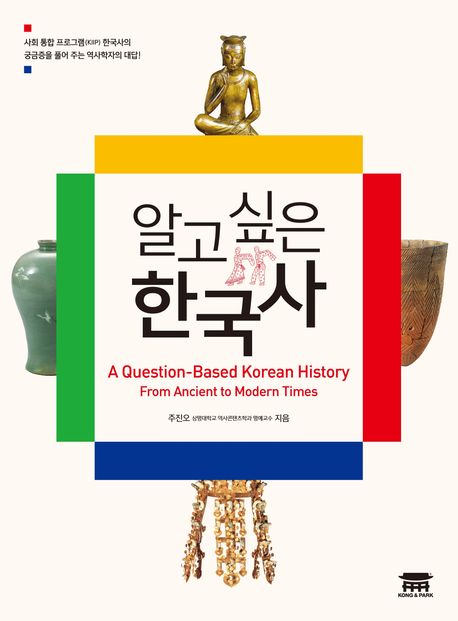
책소개역사학자 주진오가 제안하는 한국 역사 문화 교재!
A Historian?Guided Textbook for Learning Korean History and Culture!
세계인이 주목하고 있는 K-컬처는 드라마와 대중음악을 넘어 뮤지컬과 댄스 등 K-콘텐츠 전반으로 그 지경을 넓히고 있습니다. 이에 따라 한국어 교육에 대한 수요가 폭발적으로 늘고 있고, 한국어 교육 과정에서 한국 역사를 비롯한 한국 문화의 정규 강좌 비중도 늘고 있습니다. 한 사회의 문화를 이해하기 위해 언어가 필수적이고, 그 사회의 언어를 제대로 이해하기 위해 문화에 대한 이해가 수반되어야 하기 때문입니다. 특히 지금 한국인이 사용하는 말들은 역사 속에서 만들어진 결과물이어서, 한국 문화에 대한 관심이 이끈 한국어 교육 현장의 열기가 한국어 문화 수업으로까지 확산되는 것은 어쩌면 당연한 결과입니다.
이 책은 역사학자가 한국어 교육 현장에 제안하는 한국 역사 문화 교재입니다. 특히 한국어 능력 및 한국사를 포함한 한국 사회·문화에 대한 이해를 중요한 학습 목표로 삼고 있는 한국 법무부 주관의 사회 통합 프로그램(KIIP) 주제를 포괄하여, 한국어 교육 현장에서 한국 사회ㆍ문화 수업 자료로 활용하기 좋습니다. 또한 이 책은 세계인의 시선에서 한국사를 질문하고 역사학자인 저자가 답하는 방식으로 전개되었기 때문에, 한국어 교육 현장의 교강사와 외국인 학생들, 다문화 가정의 구성원들, 나아가 해외 한글학교의 교강사와 재외 동포들이 한국어와 한국의 역사 문화를 올바로 이해할 나침반이 될 것입니다.
Global interest in K?culture continues to grow, expanding beyond dramas and K?pop into areas such as musicals and dance. As this broader wave of K?content spreads, demand for Korean?language education has risen sharply, and Korean?language programs are increasingly incorporating full courses on Korean culture and history into their regular curriculum. This shift reflects the understanding that learning a language is inseparable from learning the culture of the society that uses it, and that meaningful language acquisition requires cultural understanding. In particular, the Korean language used today is a product of historical development, so it is natural that the enthusiasm for Korean culture seen in Korean?language classrooms is extending into courses on Korean history and culture.
A Question?Based Korean History is a historian?guided Korean history and culture textbook. As it covers the themes of the Korea Immigration & Integration Program (KIIP), administered by Korea’s Ministry of Justice-an initiative that emphasizes both Korean?language proficiency and cultural understanding, including history-it serves as a valuable resource for teaching Korean society and culture in Korean?language classrooms. The book is structured in a Q&A format: a learner poses questions about Korean history from a global perspective, and a historian responds with clear, insightful explanations. This approach makes the book a reliable compass for Korean?language instructors and learners, members of multicultural families, teachers at overseas Korean schools, and Koreans living abroad, helping them gain an accurate understanding of the Korean language as well as Korea’s history and culture.
“저는 그동안 여러 차례의 해외 한글학교 특강에서 한국어 교육과 병행하여 한국사를 제대로 가르칠 필요가 있다는 점을 강조해 왔습니다. 그럼에도 불구하고 명확한 해법과 대안을 내놓지 못해 답답한 심정이었습니다. 배론원격평생교육원에서 한국어 교원 양성 과정으로서 〈한국사의 이해〉를 진행하면서, ‘한국어 교육에서 한국사 수업의 방향성’에 대한 고민을 함께 나누어 보기도 하였습니다. 이 책은 바로 ‘한국사 수업으로 한국어 문해력을 향상시키고, 한국 사회·문화 교육의 깊이를 더할 수 있다.’라는 문제의식에서 쓰게 되었습니다. (중략)
오천 년 한국의 역사를 한 권의 책으로 담는다는 것은 참 어려운 일입니다. 그래서 이 책은 통사로서, 한국사를 바라보는 세계인이 궁금해하는 대목을 질문으로 제시하고 그에 답하는 방식으로 서술하였습니다. 또한 세계인의 시선에서 사회 통합 프로그램의 주제를 바라보아, 한국사를 세계사와 연계한 다양한 활동으로 제안하였습니다. 대한민국의 2022년 개정 교육과정에 따른 최신 중·고등 역사 교과서 편제와 기준을 따랐고, 국제 통용 한국어 표준 교육과정에 따라 중·고급 어휘는 영어를 기함으로써 독자들의 편리를 도모하였습니다.“
- 머리말 중에서
I have long emphasized, in numerous special lectures at overseas Korean schools, the importance of teaching Korean history alongside Korean?language education. Yet I often felt frustrated that I could not offer a clear solution or alternative. While teaching “Understanding Korean History” in the Korean?language teacher?training program at Baeron Remote Lifelong Education Institute, I also explored with trainees how Korean?history instruction should be positioned within Korean?language education. This book was born from the belief that teaching Korean history can enhance learners’ Korean?language literacy and deepen their understanding of Korean society and culture...
It is challenging to capture five thousand years of Korean history within a single volume. For this reason, this comprehensive history book adopts a Q&A format: it presents questions that global learners are likely to have, followed by clear and engaging answers. In addition, it offers a variety of activities that connect Korean history with world history, approaching the themes of the Korea Immigration & Integration Program (KIIP) from a global perspective. The book follows the structure and standards of current secondary history textbooks based on the 2022 Revised National Curriculum, and for learners’ convenience, English translations are provided for advanced vocabulary in accordance with the International Standardized Korean Language Curriculum.
- from the Preface
상세이미지 목차머리말
교재의 구성
교재의 활용
1장 한국 최초의 역사
The Earliest History of Korea
2장 고대 국가의 성립과 발전
The Rise and Development of Ancient Kingdoms
3장 통일 신라와 발해
Unified Silla and Balhae
4장 고려의 성립과 발전
The Rise and Development of the Goryeo Dynasty
5장 무신 정변 이후 고려 사회의 변화와 국제 관계
Social Change and International Relations after the Military Coup in the Goryeo Dynasty
6장 조선의 성립과 사회상
The Rise of the Joseon Dynasty and Its Society
7장 전쟁 이후 조선 사회의 변화
Societal Transformations in Joseon after the Wars
8장 19세기 국제 사회와 조선의 개화 정책
19th Century International Community and Joseon’s Enlightenment Policy
9장 근대 국가 수립 운동
Movements for Establishing a Modern State
10장 제국주의의 침탈에 맞선 한국의 국권 수호 운동
The National Rights Protection Movement against Imperialism
11장 1910∼1920년대 일제 식민지 지배 정책과 민족 운동
Japanese Colonial Rule Policies and Nationalist Movements in the 1910s and 1920s
12장 1930∼1940년대 일제 식민지 지배 정책과 민족 운동
Japanese Colonial Rule Policies and Nationalist Movements in the 1930s and 1940s
13장 광복 이후 격동의 한국
Korea in the Tumultuous Post-Liberation Period
14장 현재와 미래의 한국
Korea’s Present and Future
색인
한국어 사회·문화 도서 연계표
출판사 서평■ 이 책의 특징 (Features)
1. 역사학자 주진오가 제안하는 한국 역사 문화서!
A Historian?Guided Textbook for Learning Korean History and Culture!
한국의 중·고등학교 검정 교과서 대표 집필을 맡고 국내외 다양한 교육 현장에서 한국사를 가르쳐 온 역사학자 주진오가, 세계인이 궁금해하는 한국사 항목을 질문으로 제시하고 답하는 방식으로 한국 역사 문화를 전개하였습니다.
Korean historian Chu, Chin Oh-who has served as a lead author of nationally certified secondary history textbooks and has taught Korean history in a wide range of educational settings both in Korea and around the world-presents Korean history and culture through a Q&A approach. He introduces key topics that global learners are curious about as questions and then offers answers.
2. 사회 통합 프로그램의 주제 이해를 돕는 한국 역사 문화서!
A Korean History and Culture Textbook approaching the themes of the Korea Immigration & Integration Program (KIIP)
세계인의 시선에서 사회 통합 프로그램(KIIP)의 주제를 바라보고 한국사를 세계사와 연계한 다양한 활동으로 제안함으로써 국내외 한국어·한국 문화 교육 현장에서 폭넓게 활용할 수 있습니다.
It offers a variety of activities that connect Korean history with world history, approaching the themes of the Korea Immigration & Integration Program (KIIP) from a global perspective, and it can be widely used in Korean?language and Korean?culture education settings both in Korea and around the world.
3. 실제 수업을 구조화한 한국 역사 문화서!
A Korean History and Culture Textbook for Structuring Authentic Classroom Lessons
이 책은 각 장별 ‘읽기 전 활동-읽기 활동-읽기 후 활동’의 3단계로 구조화하였습니다. 먼저 읽기 전 활동으로서 ‘연표’와 ‘핵심 용어’를 살피고, 읽기 활동으로서 14개 장으로 나누어진 시대를 이해합니다. 마무리 읽기 후 활동으로서 ‘확인 문제’와 함께, 세계인의 시선에서 사회 통합 프로그램의 주제를 바라보아 한국사를 세계사와 연계한 ‘읽기-쓰기-말하기-듣기’ 통합형 ‘토의 활동’을 진행할 수 있습니다.
It is organized into three parts within each chapter: before?reading, main reading, and after?reading activities. In the before?reading section, learners examine the timeline and keywords. They then move on to the main text to build a deeper understanding of the content. Finally, in the after?reading section, learners answer comprehension questions and engage in integrated reading?writing?speaking?listening activities that promote discussion and presentation. These activities connect Korean history with world history and approach the themes of the Korea Immigration & Integration Program (KIIP) from a global perspective.
4. 최신 교육과정을 반영한 한국사와 한국어 통합 교재!
A Korean History and Language?Integrated Textbook Reflecting the Current National Curriculum
2022년 개정 교육과정에 따른 중·고등 역사 교과서의 편제와 기준을 참고하여, 한국 최초의 역사부터 미래의 한국에 이르기까지 14개 장으로 구성된 한국사와 한국어 통합 교재입니다.
It is a Korean history and language?integrated textbook consisting of fourteen chapters, covering Korea’s past from its earliest beginnings to its future outlook. It follows the structure and standards of current secondary history textbooks based on the 2022 Revised National Curriculum.
5. 국제 통용 한국어 표준 교육과정에 따른 어휘군을 국영문으로 병기한 교재!
A Textbook Providing English Translations for Vocabulary in Accordance with the International Standardized Korean Language Curriculum
국제 통용 한국어 표준 교육과정에 따른 중·고급 어휘는 영문을 함께 표기함으로써 독자들의 편리를 도모하였습니다. 이로써 학습자는 역사적 이해와 함께 한국어 어휘 및 표현 능력을 갖출 수 있습니다.
For learners’ convenience, English translations are provided for advanced vocabulary in accordance with the International Standardized Korean Language Curriculum, enabling learners to build vocabulary and expressive skills while also deepening their historical understanding. |
| 교환 및 환불 가능 |
상품에 문제가 있을 경우 |
1) 상품이 표시/광고된 내용과 다르거나 불량(부패, 변질, 파손, 표기오류, 이물혼입, 중량미달)이 발생한 경우 - 신선식품, 냉장식품, 냉동식품 : 수령일 다음날까지 신청 - 기타 상품 : 수령일로부터 30일 이내, 그 사실을 안 날 또는 알 수 있었던 날로부터 30일 이내 신청 2) 교환 및 환불신청 시 판매자는 상품의 상태를 확인할 수 있는 사진을 요청할 수 있으며 상품의 문제 정도에 따라 재배송, 일부환불, 전체환불이 진행됩니다. 반품에 따른 비용은 판매자 부담이며 환불은 반품도착일로부터 영업일 기준 3일 이내에 완료됩니다. |
|
단순변심 및 주문착오의 경우 |
1) 신선식품, 냉장식품, 냉동식품 재판매가 어려운 상품의 특성상, 교환 및 환불이 어렵습니다. 2) 화장품 피부 트러블 발생 시 전문의 진단서 및 소견서를 제출하시면 환불 가능합니다. 이 경우 제반비용은 소비자 부담이며, 배송비는 판매자가 부담합니다. 해당 화장품과 피부 트러블과의 상당한 인과관계가 인정되는 경우 또는 질환치료 목적의 경우에는 진단서 발급비용을 판매자가 부담합니다. 3) 기타 상품 수령일로부터 7일 이내 신청, 왕복배송비는 소비자 부담 4) 모니터 해상도의 차이로 색상이나 이미지가 다른 경우 단순변심에 의한 교환 및 환불이 제한될 수 있습니다. |
|
| 교환 및 환불 불가 |
1) 신청기한이 지난 경우 2) 소비자의 과실로 인해 상품 및 구성품의 전체 또는 일부가 없어지거나 훼손, 오염되었을 경우 3) 개봉하여 이미 섭취하였거나 사용(착용 및 설치 포함)해 상품 및 구성품의 가치가 손상된 경우 4) 시간이 경과하여 상품의 가치가 현저히 감소한 경우 5) 상세정보 또는 사용설명서에 안내된 주의사항 및 보관방법을 지키지 않은 경우 6) 사전예약 또는 주문제작으로 통해 소비자의 주문에 따라 개별적으로 생산되는 상품이 이미 제작진행된 경우 7) 복제가 가능한 상품 등의 포장을 훼손한 경우 8) 맛, 향, 색 등 단순 기호차이에 의한 경우 |
|



 카테고리
카테고리
