

| 상품 안내 및 환불, 교환, 배송문의 | |
| - 가게 전화번호 : | 1544-1900 |
| - 전화문의 시간 : |
오전 9시부터 오후 6시까지 (매주 월요일, 화요일, 수요일, 목요일, 금요일, 공휴일 제외) |
| - 가게 이메일 : | ink@kyobobook.co.kr |
| - 이용 택배회사 : | CJ대한통운 |
|
판매가게정보 |
|
| - 사업자명 : | (주)교보문고 |
| - 사업자등록번호 : | 102-81-11670 |
| - 통신판매업신고 : | 01-0653 |
|
- 현금영수증 : 발급가능 |
|
|
전화주문 및 결제문의 |
|
| - 꽃피는 아침마을 : | 1644-8422 |
|
가게와 직거래를 하시면 꽃송이 적립 및 각종 혜택에서 제외되고, 만일의 문제가 발생하는 경우에도 꽃마의 도움을 받으실 수 없습니다. 가게의 부당한 요구, 불공정 행위 등에 대해서도 꽃마로 직접 전화주세요. |
|

| 상세정보 | 구매후기 (0) | 상품Q&A (0) | 배송/교환/환불 안내 |
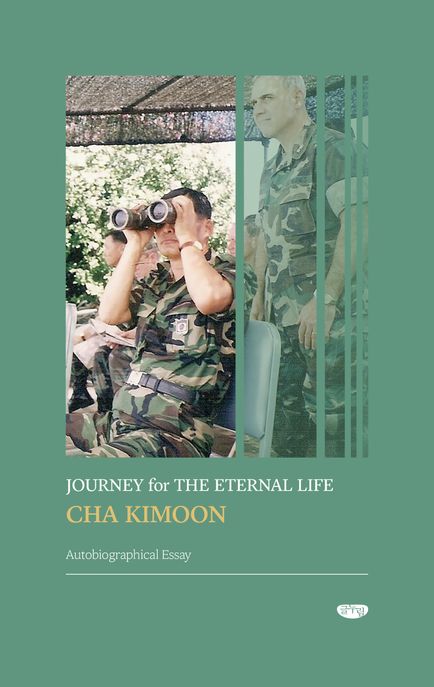
책소개Generally, a written account of one’s life is called an autobiography. When the focus shifts more toward the environment or era in which the author lived, it becomes a memoir. Some autobiographies, such as Goethe’s Poetry and Truth, weave in creative elements and have literary value. This book is neither a heroic memoir in the vein of Churchill, MacArthur, or Schweitzer nor a literary work of the caliber of Tolstoy or Goethe.
Rather, it is a raw, essay-style expression of the inner record of my life. Its purpose is to pass on my experiential philosophy of life as an inspiration for future generations. Only when one is prepared to cast aside this single life like a blade of grass for the sake of the nation and humanity, one can attain eternal life. Life becomes eternal not through the pursuit of personal gain or comfort but through a resolute view of life and death-one devoted to defending the nation and striving for world peace.
I came of age in a generation marked by turmoil. Born in the final years of World War II, during the final throes of Japanese imperialism, I lived through the Korean War. Amid the painful division of my homeland, I witnessed the righteous struggle to defend democracy. My worldview was deeply shaped by the crimson blood of the 4.19 Student Revolution, a movement that rose against one-party dictatorship and was marked by the sacrifice of many lives. I entered the Korea Military Academy in the aftermath of the 5.16 Military Coup, which was driven by the goal of national modernization. Our generation lived through the assassination of Park Chung Hee on October 26 and the military insurrection on December 12 and, ultimately, the 6.10 Struggle, which brought forth the flower of democratization. Many of us went on to lead the IT industry, spearheading the information age and becoming pioneers in the era of artificial intelligence. Even amid such upheaval, we were the generation that transformed a once-primitive society into a highly advanced civilization in just a few decades-building on 5,000 years of history. We were key figures in the proud emergence of a modern nation, having brought about industrialization, democratization, informatization, and the AI era while overcoming the shame of once being called a backward country.
I was born and raised in remote mountain village by the Nakdong River during an era of widespread poverty. People survived by eating roots and tree bark, but I went to Daegu to pursue my education as a boy passionate about learning. From an early age, I learned to live independently, away from my parents and developed a strong sense of self-reliance while dedicating myself to my studies. Thanks to scholarships from various foundations, including the Rotary and Lions Clubs, I was able to rise from nothing. No matter how difficult the circumstances, I fully benefited from the opportunities in my homeland, where anyone could freely develop their innate talents.
I wanted to honorably repay the grace given to me by my country and society, so I chose the path of self-sacrifice and dedication to public service. I entered the Korea Military Academy. The life of a soldier is not one of ease, driven by personal interests; rather, it is a challenging and righteous path in which one sacrifices their life for a greater cause. I devoted myself to the nation, the people, and world peace, seeking eternal life through faith in God and a life of service.
I began keeping a journal in elementary school. Although there have been inevitable interruptions along the way, my record will continue until the day I take my last breath. This book is based on the stories from my journals. The notes and essays I've written over the years, along with the photographs stored in albums, USB drives, and PC files, have all helped bring memories back to life.
This book is divided into two parts. Part I describes my dreams of ambition. While gazing at the tranquil flow of the Nakdong River along Deoksilgol, a remote mountain village, I pondered what I should do for the country, the people, and humanity and left my hometown. With an indomitable will, I dedicated myself to my studies, adopting the spirit of the great principles as my motto: "Love others and never deceive myself." I entered Hwarangdae and tempered myself in the furnace of life, striving to realize my lofty dreams.
Part 2 vividly portrays my life as a soldier, from my time as a junior officer to a general. It recounts my experiences, including searching for armed North Korean infiltrators in the Seoraksan region, navigating life-and-death moments in the jungles of Vietnam war under the Cross of the Southern Star, and later serving as the Defense Secretary of President at the Blue House, Deputy Chief of Staff at the ROK-U.S. Combined Forces Command, and Senior Membrer of the Military Armistice Commission. In these roles, I played a key part in developing and implementing national strategies and policies.
My life has been guided by the belief: 'Take action, and opportunities will open up,' and 'Without obsessive passion, there is no greatness.' I approached my work with unwavering loyalty and a deep sense of mission, dedicating myself to the nation, the people, and world peace. With the remaining passion, I devoted myself to mentoring the next generation.
I owe my deepest gratitude to my wife, Kim Kyeung-ah; daughter, Cha Soo-jin; son-in-law, Kim Ju-hyeuk; son, Cha Jeong-seok; and daughter-in-law, Park Bok-seon, for their help in collecting materials and proofreading this book. Hoping that this work may serve as a guiding light for young people pursuing an immortal life, I dedicate this work to the souls of those who gave their lives for the country and the people.
상세이미지 저자소개저자 : CHA KIMOON
ㆍKorean Military Academy (23rd Class)
ㆍU.S. Army Command & General Staff College (1978 Class)
ㆍKorea University (MBA)
ㆍU.S. Troy State University (MBA)
ㆍKyeungnam University (Ph.D)
ㆍOperational Staff of the 6th Corps (G3)
ㆍChief of Staff of the 5th Corps
ㆍCommander of the 37th Infantry Division
ㆍPresidential Secretary of Defense (Blue House)
ㆍDCS of the ROK/US Combined Forces Command &
Senior Member of the UNC Military Armistice Commission
ㆍRetired Lieutenant General (Army)
ㆍProfessor, Cheongju University
ㆍProfessor, Pyeongtaek University
ㆍDirector, International Education Center
ㆍChairman of the ROK/U.S. Forum
Autonym
ㆍFrom the Armistice to Peace
ㆍRighteous War
ㆍand others
목차Part I The Pursuit of Lofty Dreams
Chapter 1 Childhood in Deoksilgol
1. Born as a Farmer’s Son in Deoksilgol
2. 41st Generation of the Yeonan Cha Clan
3. My Father’s Lesson, “Stay Resolute in All Things”
4. My Mother, the Embodiment of Affection and Love
5. Childhood Friends Who Shared Everything Down to the Last Candy
6. Outbreak of the Korean War and My Childhood
7. Six Years of Excellence and Perfect Attendance at Deokgok Elementary School
Chapter 2 My Youth Away from Home
1. From Deoksilgol to Daegu
2. The Rising Star by Suseong Stream
3. Junk Boots from the Yankee Market
4. Years of Turmoil
5. The Spirit of Martial Arts Cultivated in the Judo Hall
Chapter 3 The Immortal Spirit of the Hwarang
1. My First Step into the Hwarangdae 3
2. Human Transformation: Basic Military Training
3. In the Crucible of Life
4. Army, Navy, and Air Force Cadets’ Brotherhood Oath
5. Daily Test System
6. The Heart-Throbbing Hwarang Festival
7. The Star of Hwarangdae
Part II Guardians of the Nation
Chapter 1 The Years as a Company Officer
1. Officer Basic Course at the Infantry School
2. Three Musketeers to the 17th Regiment
3. Vietnamese Language Training School
4. To the Vietnam war
5. The ROK/US Combined Planning Staff
6. Public Proposal and Marriage
7. Being a Company Commander and Newlywed
8. The Tearful Farewell Ceremony of the Company Commander
9. To the Officer Advanced Course
Chapter 2 The Years as a Field Officer
1. The Cradle of Military Education: ROK Army College
2. Operations Officer of the ROK/US Combined 1st Corps and the 8.18 Hatchet Massacre
3. Studying at the U.S. Army Command and General Staff College
4. Wargame Officer and Promotion to Lieutenant Colonel
5. Airborne Training During Leave
6. Commander of the 9th Division’s Reconnaissance Battalion
7. The Military Faction Scandal
8. Designated to the Samcheong Education Center
9. The Best Regiment in the RCT
10. Vanguard Regiment in the Team Spirit Exercise
11. Selected as the Operations Officer of the 6th Corps
Chapter 3 The Years as a General
1. Chief of Staff of the 5th Corps
2. Serving at Coast Guard Posts on the East, West, and South Coasts
3. My Connection with the 37th Division
4. Defense Secretary to the Blue House
5. DCS of the ROK/US Combined Forces Command &
Senior Member of the Military Armistice Commission
6. Departing from Active Duty 3
Epilogue
The Ten Commandments of Leadership |
| 교환 및 환불 가능 |
상품에 문제가 있을 경우 |
1) 상품이 표시/광고된 내용과 다르거나 불량(부패, 변질, 파손, 표기오류, 이물혼입, 중량미달)이 발생한 경우 - 신선식품, 냉장식품, 냉동식품 : 수령일 다음날까지 신청 - 기타 상품 : 수령일로부터 30일 이내, 그 사실을 안 날 또는 알 수 있었던 날로부터 30일 이내 신청 2) 교환 및 환불신청 시 판매자는 상품의 상태를 확인할 수 있는 사진을 요청할 수 있으며 상품의 문제 정도에 따라 재배송, 일부환불, 전체환불이 진행됩니다. 반품에 따른 비용은 판매자 부담이며 환불은 반품도착일로부터 영업일 기준 3일 이내에 완료됩니다. |
|
단순변심 및 주문착오의 경우 |
1) 신선식품, 냉장식품, 냉동식품 재판매가 어려운 상품의 특성상, 교환 및 환불이 어렵습니다. 2) 화장품 피부 트러블 발생 시 전문의 진단서 및 소견서를 제출하시면 환불 가능합니다. 이 경우 제반비용은 소비자 부담이며, 배송비는 판매자가 부담합니다. 해당 화장품과 피부 트러블과의 상당한 인과관계가 인정되는 경우 또는 질환치료 목적의 경우에는 진단서 발급비용을 판매자가 부담합니다. 3) 기타 상품 수령일로부터 7일 이내 신청, 왕복배송비는 소비자 부담 4) 모니터 해상도의 차이로 색상이나 이미지가 다른 경우 단순변심에 의한 교환 및 환불이 제한될 수 있습니다. |
|
| 교환 및 환불 불가 |
1) 신청기한이 지난 경우 2) 소비자의 과실로 인해 상품 및 구성품의 전체 또는 일부가 없어지거나 훼손, 오염되었을 경우 3) 개봉하여 이미 섭취하였거나 사용(착용 및 설치 포함)해 상품 및 구성품의 가치가 손상된 경우 4) 시간이 경과하여 상품의 가치가 현저히 감소한 경우 5) 상세정보 또는 사용설명서에 안내된 주의사항 및 보관방법을 지키지 않은 경우 6) 사전예약 또는 주문제작으로 통해 소비자의 주문에 따라 개별적으로 생산되는 상품이 이미 제작진행된 경우 7) 복제가 가능한 상품 등의 포장을 훼손한 경우 8) 맛, 향, 색 등 단순 기호차이에 의한 경우 |
|



 카테고리
카테고리
